We’ve all been in bad meetings. And no matter how great your crew is, bad meetings waste time and can degrade the culture you’ve worked hard to build. We’ve talked before about which meetings are worth having, now it’s time to dive into how to get the most out of those meetings. Doing so will:
increase the effectiveness of meetings;
decrease the number and duration of meetings;
build team cohesion;
cross-pollinate information across teams; and
do so in a way which leads to new insights otherwise left buried.
To reap these benefits, utilize the guiding principles in this three-part series for useful meetings: determining whether you need a meeting, building an agenda and facilitating, and choosing the right facilitator to ensure everything runs smoothly. In this first part, we’ll (re)cover some of the ways to be sure the meeting you want to hold is worthwhile.
Any scheduled event is potentially disruptive to a colleague’s flow. Meetings can be a waste of time and, even in the best case scenario, often require context switching. It’s important to make sure you actually need someone to do something synchronously with you, rather than calling a meeting for something that be fit into their own flow asynchronously in a more optimal way.
When it makes sense to have a meeting
The following circumstances are worthy of a meeting:
When something can’t be decided on asynchronously – A chat (like Slack) just isn’t working. Something is being lost in tone or the information being gathered and the team would benefit from more mediums of communication (visual, verbal, physical) happening all at once.
When something has been decided, but there needs to be a group status update to move on to other things – Sometimes, everyone knows the status of a project, but they don’t know that everyone else is on the same page. This can lead to concerns about leaving someone behind and cause a slow the velocity of the project. A recap meeting that ensures that everyone is aware of what decisions are set allows the team to collectively move on to the next phase.
Distributed self-coordination – Instead of reading documentation, sometimes it’s more efficient to have a rapid-iteration conversation about where to go to next, together. This example is similar to scenario #1 with a splash of #2.
To build team cohesion – Asynchronous communication with occasional one-on-ones just doesn’t keep the whole team together. Sometimes the team needs to get together to learn from each other, and to realize just how in alignment they already are. This scenario is mostly #2 with a splash of #1.
When you shouldn’t have a meeting
Some “meetings” do more to waste time than to move a project forward, leading to a lot of frustrated team members. Here are some signs you’re not having a meaningful meeting:
You’re reading together – There are some folks who just don’t read materials they are sent. Whether they don’t have the time, the material is irrelevant, or they don’t like reading doesn’t matter. What matters is that someone has just disrupted another person’s flow to insist they come and read this thing right now, in a “meeting.”
You’re listening to one person speak – If you want to give a presentation, own it! But a presentation can be ingested just as easily via a video or audio recording as it can in person. Again, don’t disrupt people’s flows.
You’re hearing people talking about things they already know – This isn’t a meeting, it’s a panel discussion. The same principles apply as listening to one person speak. If you’re not up to adapting to your audience or working with them to get somewhere new, just record it. The knowledge is still useful, but the disruption of other people’s flows is not.
On the other hand, question and answer sessions after reading, presenting, or paneling do make sense to do interactively, so it’s worth it to call a meeting after the above non-meetings to share ideas.
Useful gatherings that are not meetings
There are times when it makes sense to meet with someone or a group that don’t fit the parameters above. They include:
Conversations – These are great, but trying to facilitate them with the meeting-level rigor suggested in this series will not make you popular amongst your peers.
Celebrations – While some programming is useful, celebrations are organic things that don’t need any more structure than they already have.
Skill shares – Vital to upping skills and building relationships, these also should be a bit more organic than what is described in this post.
Some of the same principles will apply, but these gatherings are not what this series focuses on.
Why are we doing all this?
Bad meetings, like bad policies and negative environments, are tractable problems. By following the techniques highlighted here around determining when to have meetings, your meetings can be worth the context switching they require by being impactful and more effective, building team cohesion, and leading to new insights that would otherwise be left buried.
OK, let’s say you definitely need this meeting. The next step is to be sure those meetings matter through agenda building and facilitation. Discover how to utilize these strategies in part two of our series, Well Met: The Meeting Itself.
In the world of disaster response, teams engage in something called a “hot wash” after each deployment. If something went wrong, we ask ourselves: How could this have been prevented? It’s a question that helps us mitigate crises rather than simply respond to them. Sometimes, if a responder is about to do something particularly ill-advised, say in a social context, another responder will ask them, “How could this accident have been prevented?” as they walk towards potential harm or embarrassment.
As someone who has done crisis response for the past eight years, the pre-mortem we held on my third day at Truss made me feel right at home. It was the last day of an intensive kickoff event for our DOD project (more about how we won that here). Our engineering architect Nick Twyman led the assembled team in a session to brainstorm issues which might be severe enough to tank the project. He opened with the prompt, “Imagine you’re presenting to the entire company 12 months from now and must explain why this project completely failed.”
Engaging in this practice:
Surfaces potential issues before they become problematic.
Prevents team members from suffering in silence or needlessly worrying.
Replaces reaction with strategy.
We’ve already benefited immensely from this practice. For instance, we learned to identify and engage early with stakeholders who otherwise might have been invisible until too late. This has allowed us to pay attention to serious concerns while also staying focused on the emerging roadmap for the project.
Where did this idea come from?
Our CTO, Mark Ferlatte, learned about the practice from Daniel Kahneman’s book Thinking Fast and Slow. He noted that it “felt incredibly weird the first time you do it.” The book covers different modes of thinking and responding to what feels immediate versus the strategic, tricks to help you move from reacting to planning, as well as how to be self-aware when in difficult conversations.
We’ve developed our own flow for pre-mortems, and have benefited in various ways. In one instance, the team indicated that they were feeling unsure about being able to track things properly. This feedback resulted in an ad hoc training session on our task tracking tool with positive results.
How do I do it?
You, too, can avoid delays, derailments, and failures by following this process. Whether you refer to it as “forecasting” or “generalized anxiety,” there are a few simple steps.
First, think about when it makes sense to have a pre-mortem. We do ours at the end of a project kickoff (when folks have the project fresh in their minds but haven’t yet started building habits and opinions about how things “should” be). You can also run more than one for any given project. It’s particularly helpful to do during sprint planning sessions or prior to irrevocable commitments (before we sign the contract, before we begin execution on the contract, before we go live with the product).
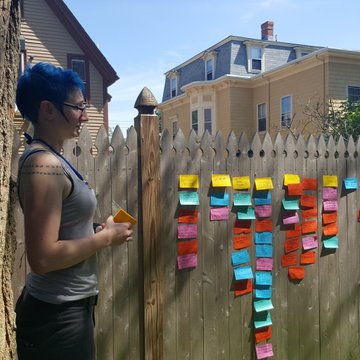
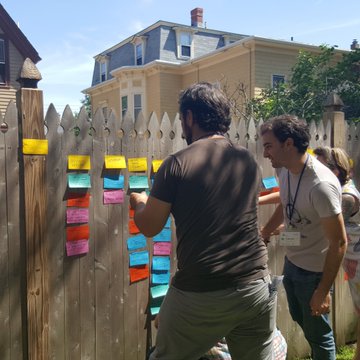
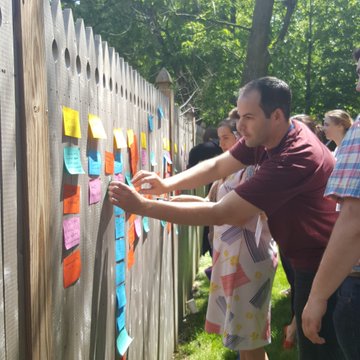
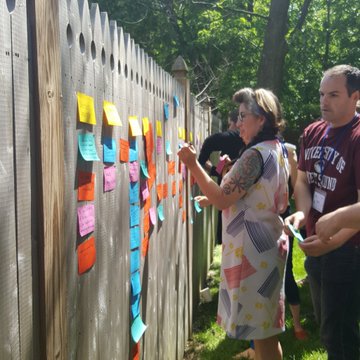
Don’t lead the session by asking a broad question like: How might this go wrong? Instead, be very specific. We used the prompt mentioned above, emphasizing two important factors. “Imagine you’re presenting to the entire company 12 months from now and must explain why this project completely failed.” These two aspects helped people move beyond generalized anxiety and into thinking strategically about what they are unlikely to be able to adapt to themselves. In a larger group, give everyone sticky notes and about five minutes to write down their thoughts, then group their ideas into categories while reading them out loud. In a smaller group, take a minute or so to think about it, and then go around in a circle to hear what folks came up with.
Some of the concerns raised might not surprise you. Ideally, you’re already mitigating risk around the topics some people bring up. Sometimes, though, someone will say something new or extremely obvious and scary (for example: “None of us have ever published a book” when the project is to write a book). Mark treats these concerns very seriously and attempts to mitigate them as quickly as possible (for example: hire an agent to help us navigate book publishing).
We found that those obvious and scary observations were more likely to come from junior rather than senior employees. Senior people often overlooked obvious risks because they had “always managed before.” Junior team members were justifiably concerned when they felt like the project was missing key factors, but they wouldn’t speak up if their concerns were dismissed. Yet another reason to be sure your environment is open and safe for employees to voice their concerns.
Good luck out there!
Pre-mortems are a tool to start thinking about the future and to do so strategically rather than reactively. This helps teams avoid pitfalls and focus their work. Pre-mortems are easy to hold and can happen at multiple points during a project’s lifespan.
May all of your difficulties be novel, and good luck out there!
We have been working on a map of the digital response ecosystem here at Aspiration. While we still have a ways to go, I wanted to pause to reflect on why we are working on it and some things I have learned along the way. If you’re so inclined, the closing section includes a request for feedback and a way to be in touch.
The current state of affairs
Disaster and humanitarian response happen in a chaotic and low-information environment. Even if historical context, accurate maps, and up-to-date data existed before a shock, an extreme event will have disrupted that baseline in dramatic ways. Response organizations deploy into these environments seeking what we call “situational awareness,” sometimes wondering about who to ask about the location of vulnerable persons, other times wanting to know which roads are still navigable. In order to know more about their physical and logistical environment, many response organizations and community groups are beginning to make use of digital tools. There are also digital tools which allow us to do truly new things in addition to information gaining and sharing. Digital tools might be in the form of crowd-sourced maps about needs and outages made from Twitter updates with hashtags, or images composited from a drone for an overview of an affected region for locating the most damaged areas, or heavy statistical modeling based on datasets from multiple sources for more precise resource distribution. The introduction of these new people, processes, and tools for digital response can increase the chaos of response or alleviate it.
Official and specialized actors such as United Nations Office of Coordinated Humanitarian Affairs (UNOCHA) and the International Federation of Red Cross and Red Crescent Societies (IFRC) stand to benefit from the new skills of digital tools and the processes they enable when they are able to fold these new tools into their existing structures. When they are able to do this, we all benefit from their increased capacity. Frontline populations in affected regions continue to use digital tools like Signal and Facebook to organize themselves and coordinate response. Community groups such as churches and schools are using their existing digital community infrastructure to organize larger local relief efforts. Digital responders help to clean, structure, and utilize the massive amounts of information generated in times of crisis so those in the midst of the chaos can have more visibility to the requests, offers, and other factors in play around them.
Is there any signal in this noise?
What does this flurry of activity look like, and how can it be improved? How can we someday make crisis response boring? What are the patterns in who does what, when, and how do they coordinate with each other? While some official organizations have name-brand recognition, there is little understanding of local, emerging, and digital sectors. Their contributions and challenges are often rolled up into the official response organizations’ documentation, if it is documented at all. The flows of information, communication, and other aspects of coordination are poorly understood, even by those within the ecosystem, and especially in regards to the smaller and newer groups. Is it feasible to have a roster of all local groups with capacity related to response? Who would build it and keep it up to date? Would we trust the data it contained? It is this complexity which is partly to blame for official response organizations not being able to have situational awareness and to relatedly struggle to meet local needs. So when an extreme event happens, groups spin up locally and remotely because of pressing need and the invisibility or inadequacy of pre-existing response groups. Those new groups persist, morph, merge, or dissolve through response and recovery phases of the disaster cycle. It used to be standard for several hundred response groups (pre-existing or otherwise) to respond to a crisis. Four thousand responded to the Haitian earthquake. The desire to involve technology in this mix has increased the number of factors to consider by adding in tools, active remote and local people, and even new abilities. Most people also point at the 2010 earthquake in Haiti as the first instance of digital tools making a discernible impact in crisis response. While this is a moment of potentially increased chaos in a space sorely needing alignment and sharing, it is also a moment of potential. What if we bring our ideals of openness and co-equality to the table? What if we trust the network (frontline community members, official responders, volunteers, remote assistance, etc.) to understand and sort itself out, adapting to challenges as they emerge?
Making the invisible visible
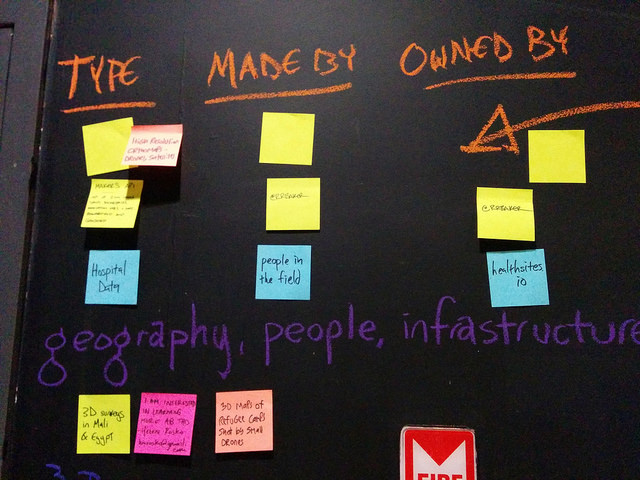
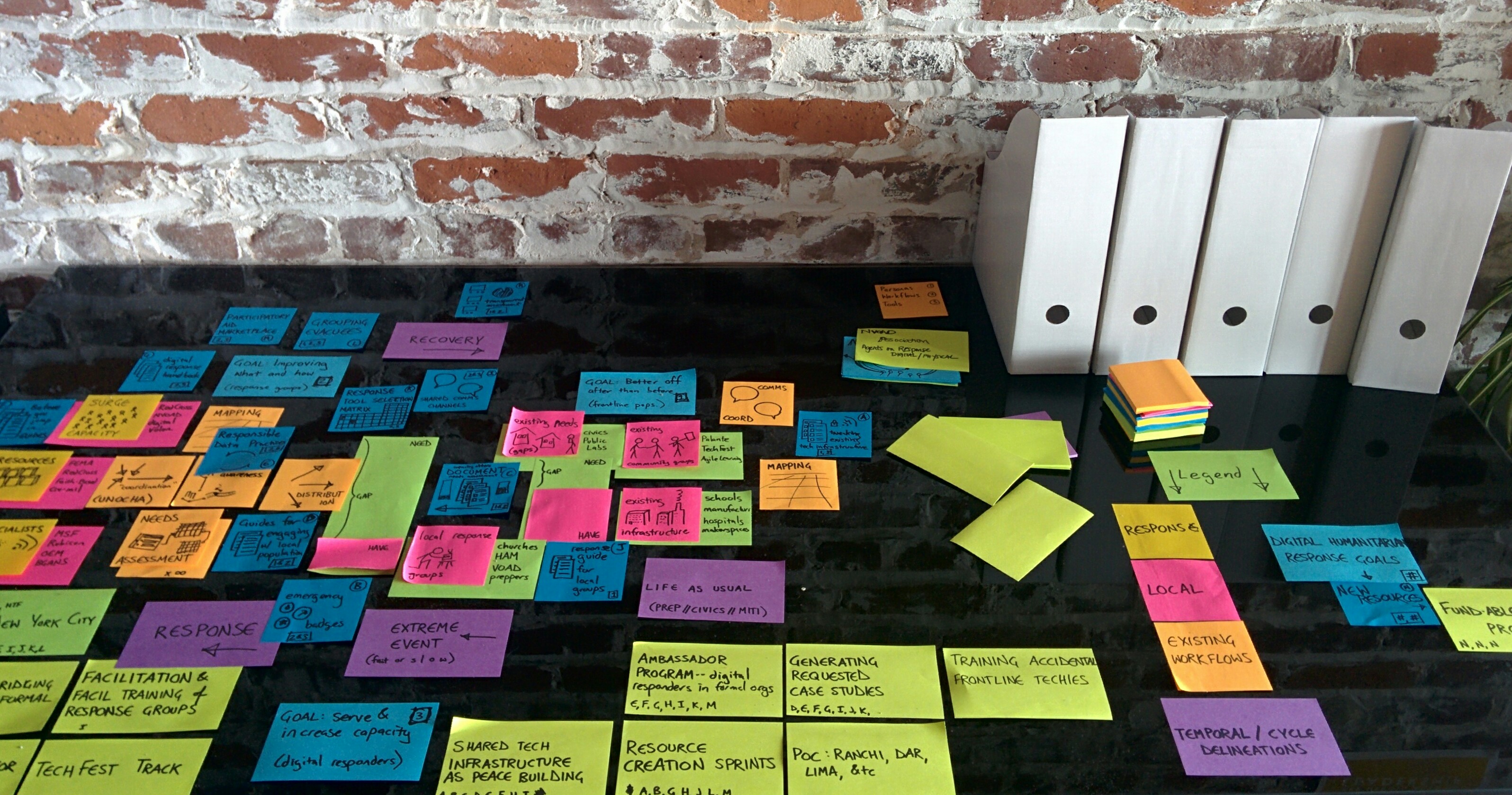
With acknowledgement that the digital response ecosystem is a living and changing thing, a map of it could provide a shared view of current actors, the tools they use, the data generated and used by those tools, and the resources we build from and contribute back to. Our hope is that this shared view might help us to provide better ground for refining information flow, to discover possibilities for collaboration, and to devise shared infrastructure. We could thus begin to think more holistically about response, get insights into how to make response infrastructure and mechanisms more sustainable and scalable, and be able to easily share an overview to newcomers or other interested parties. It is with these hopes that we started asking for help in building a map of the digital response ecosystem. Through calls with allies and structured activities at Humanitarian Technology Festival, HumTech, the Doctors Without Borders Logistics Day, and at the June 2016 Digital Responders’ Meetup, the map is slowly beginning to take shape. Here are some things we have learned along the way.
This is a volatile space
Crisis response is by its very nature generally unpredictable. A rare caveat are hurricanes, as our weather science is getting better and better so we can approximate their strength and direction. But because we still do not understand what is going on with the earth’s crust and seas, earthquakes are still widely considered impossible to predict. Droughts are often just as political as they are about complex environmental factors, so anticipating them is somewhere in between. This means it is difficult to get any sense of predictability to rely upon or plan within for crisis response. Our data model needed to factor in the components which trigger a response group deploying or emerging from a frontline community. Activation could be based on geography (local, regional, national, international), based on the part of the disaster cycle, or based on an explicit request (from an international agency, national or local government, or a community group). Some groups (like Doctors Without Borders) are not activated from external cues per se, but instead based on their own mandates. And each of these groups focuses on different topics, ranging from accountability to mapping to data sharing to telecommunications infrastructure. To try to show connections and flows between these different entities which also bridge geography and time cycles can be somewhat daunting! Too much granularity and the whole thing is overwhelming, but too little and no patterns can be picked out.
Our sharing gaps are significant
Open (and responsible) data, libre source code, and collaboration are heavily advocated for in humanitarian and disaster response. We often hope to work miracles on shoestring budgets and with little awareness of what our comrades are up to. With a few shining examples such as Kathmandu Living Labs in the 2015 Nepal earthquake and Crisis Cleanup for Sandy, efforts to share our knowledge and intentions with each other are more often stymied than not. It is a common story that the country office of one international response nongovernmental organization does not know how (or even what) the office in another country is doing. This means it is even less likely their partner organizations or other groups in the same deployment know what they are up to. During a crisis, sharing and communication occur by force of function, but also in hugely inefficient ways because other priorities are at hand. UNOCHA has done a lot of work in this space, making it easy for deploying groups to upload and view data in a shared space through the Humanitarian Data Exchange and the Humanitarian Exchange Language, along with their traditional Cluster Approach. However, much of this work is targeted at established and dedicated response groups who know how to look for each other and have potential funding infrastructure which requires their collaboration. The smaller, ad hoc, and digital response groups do not have the context or infrastructure for their sharing and collaboration amongst themselves nor with larger response groups. There is still a lot of work to be done in sharing data and plans within and between organizations, across different parts of the response cycle, as well as with local community groups.
Who will (and can) show up changes
Because there are so many factors in who can deploy where, when, and why, investing the time in building relationships and channels for communication and sharing could be seen as a waste. It is even more impossible to have a plan that will be of any use in this circumstance than in nearly any other, and to rely heavily on rigid plans rather than adaptability is a recipe for disaster. But planning is still necessary if we are ever going to get better at response than we are now. Rather than rigid plans and expectations, we can instead focus more on the sorts of response groups that show up, the types of local groups which emerge, and the patterns of their interaction. Resources for these categories and personas have to be generalizable enough to be used, improved, and updated by anyone in that category or of that persona. Mapping the ecosystem is not just about having an easy-to-approach description of the space, but also about discovering the most strategic communally-held resources to create (or to find and share).
We would like to thank all the folks who have already spent so much time and energy on this concept with us. I have especially benefited from conversations with Devin Balkind, as well as referencing past collaborations he had a huge hand in, namely Aid Badges and Resilience Colab. Heather Leson has been a huge contributor and supporter. The attendees of Humanitarian Technology Festival, the hallway conversations at HumTech, the participants of the Doctors Without Borders Logistics and Clinician Day, and cohorts at the June Digital Responders’ Meetup have also added a great deal of information and structure to this data. Because we are doing this together, it can grow beyond a proprietary or bottlenecked resource into one useful for the entirety of the space.
After HumTechFest and the Humanitarian Technology Innovation Conference, I headed up to Toronto for the Doctors Without Borders (Médecins Sans Frontières / MSF) CanadaLogistics Day. This is a day where MSF showcases and explores the ways they currently (and potentially could) do logistics. This happens in tandem with the Clinical Day, where the doctors, nurses, and other clinicians of MSF share their technology and practices. I have been a big fan of MSF for years — their delivering basic human services into regions generally abandoned by anyone else shows a level of dedication and gumption I find admirable. Medical service delivery to these areas comes with challenges even beyond standard response. Public attention has often waned, leaving a gap in funding, donations, and international accountability. Stigma is often attached to those gaining access to basic human rights, as MSF provides medical care to civilians and militants from all sides of a conflict. Many of these regions are extremely remote. The doctors and nurses delivering these services are called medics, and the folk who back up the medics are logisticians, sometimes called “Logs.” Both sets work remotely for some tasks, while other tasks require them to be in the field. The set of Logs and Clinicians in the field and remote are linked together through communication and practice, often facilitated through technology.
One of the reasons I see MSF as so amazing is because everything they do puts the patients first. The rest of their logistics, technology, and even governance systems are designed outwards from that. Any new technology is assessed in a highly pragmatic way including questions like “what impact is it likely to have?”, “what is the failure mode?”, “who is already doing this?”, “is it worth the overhead of asking skilled practitioners to learn this new thing?” It was from this progression to the the Plateau of Productivity in the hype cycle that we looked at 3D printing and then did an overview of many different technologies, including contributing to our ecosystem map of the digital response space.
An honest look at 3D Printing
I have to admit I am hugely skeptical of the promise of 3D printing. While I lived in Seattle, there was a friendly competition between Mark Ganter at UW in what strange materials he and his students could make work through proprietary machines versus the hacked-together machines themselves produced out of Metrix Create:Space. This framed my understanding for what intellectual property battles were being fought around machines and material, how to think about material science as related to structural integrity, and what (if any) actual utility beyond prototyping 3D printing might provide. So when my host Chris Houston at MSF indicated 3D Printing was to be a topic at MSF Log Day, I balanced my desire to be skeptical with my trust that MSF is made up of realists. I was not disappointed.
Manufacturing
Let us say you are a field practitioner working at an MSF hospital in Afghanistan. If the brackets on a baby incubator break, the entire expensive and needed piece of equipment becomes a doorstop because one of the walls that would keep the baby from falling out will not stay up. To work with your Logs to get a new set of brackets possibly requires
order forms to be filled out with specifications,
for that order to fit into other work flows,
for the company to be willing and able to produce you new ones within a decent time frame and budget,
shipping those tiny pieces in with massive amounts of other goods (meaning what box it goes in matters so you can find it later),
those boxes likely getting held up at customs for an unknown amount of time, and
needing someone to figure out how to swap in the new working parts,
(often on equipment which is highly proprietary).
This can take weeks if not months (if it happens at all). All that time, there is not a safe place for babies you are delivering and care taking.
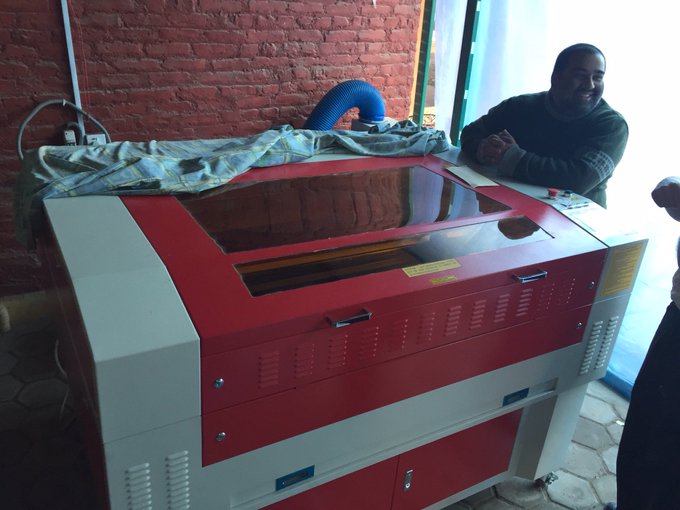
Field Ready (as represented by Eric James) is helping field practitioners both with those one-off items through 3D printing and with relying less on an international supply chain. By putting engineers and industrial designers in the field with production skills and tools, conversations open up about what can be manufactured locally — with 3D printers, desktop milling machines, laser cutters, and through pre-existing local facilities. Someday there may be no need to order 20,000 buckets from Geneva and wait for them to be made, shipped, and clear customs when there is a local bucket manufacturer. This would also keep funding and capacity local. 3D printing is shiny and new enough that it opens up these conversations about what can be made more locally and why (or why not), whether it is with a 3D printer or in a manufacturing center.
I am excited about this Field Ready because they are training up locals on the equipment, increasing technical capacity in-region. They are working to keep international aid money local, as well as strengthening those production ties to the international response scene. And they are honest about their abilities and intentions.
Prosthetics
Another use case which is worth the fickle nature of 3D printers and works within the structural integrity of the objects they produce is prosthetics. The creation of prosthetics is a time consuming and artisanal practice, requiring weeks to produce something which a child might outgrow within months. By introducing new scanning and production techniques, well-fitting prosthetics can be produced in days and at significantly less cost. This means those in need are more likely to stick around for the process, and are more likely to have better fitting pieces (which means healthier physiology) over the course of their lives.
Dan Southwick of the Faculty of Information (supervisor is Matt Ratto) provided a reality check on both of these promises by giving a very blunt overview of both the limitations on 3D printers and the contexts into which they are deployed. 3D printers are fickle, needing what is closer to a lab (controlled) environment than what a humid, buggy, and high-stress field environment might be capable of maintaining. A group he and Matt have worked with, Nia Technologies, encountered a girl wanting a second left foot as her prosthetic, as the only right foot available was not a skin tone match, and there is a cultural stigma with a missing limb in that region. While a 3D printer could have printed out a new one, knowing to bring a variety of colors for printing material is important. The culture and environment in which we work matters, and cannot be glazed over. Computer Numeric Control (often just called “CNC”) machines like 3D printers and milling machines were also created to get people out of the chain of production, as people are unpredictable. Rather than follow this pattern of pushing people out of the process, the Critical Making Lab has worked to involve them. This also maintains a long chain of knowledge and increases local capacity.
These pragmatic and committed individuals are working hard, often together, in order to ease the complications in the field by MSF practitioners.
The rest of the day
But the day was not even over yet. Brains and bellies full, we dove into the end of the day with a rapid review of other technologies MSF had been making use of for the past year, including telemedicine, mapping, mobile diagnostic tools, and an MSF app.
Telemedicine
Human beings are complex, and the things that can go wrong with our bodies are hugely diverse. When working in the field, you may be one of only a few medics for hours and hours, and the special cases which crop up can be far outside your knowledge. There are no specialists to send someone to. Store and forward is a way to benefit from specialists who are far away. Images and descriptions of cases can be sent outward for either verification (it is comforting to have someone else say “yes, that is fatal” when you would otherwise be the only person who could make that call) or diagnosis and suggested treatment for something you have never seen or read about. MSF has been using this system for a couple years now, to great success. Each response takes a few hours, so your patient is often still present for response and treatment.
Another form of telemedicine has to do with increasing capacity through ongoing communication between emerging local practice and clinicians elsewhere. More real time, this is about conversation and skill building rather than edge cases and verification. I am excited to see both models being deployed, and how it starts to cover the complicated vastness of medical service.
Mapping
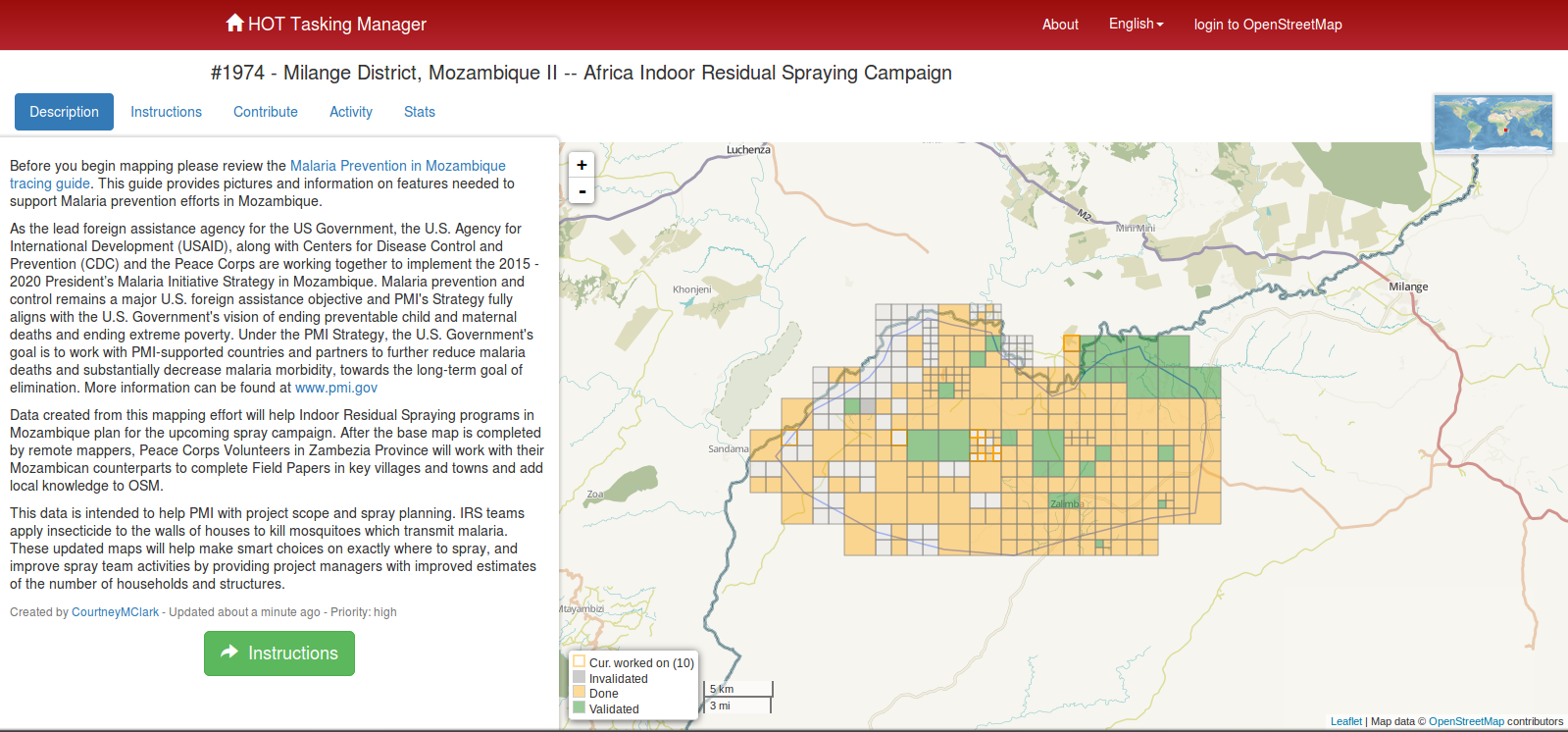
Knowing where to go relies on local knowledge and maps. Some parts of the world are not even mapped! Using satellite imagery, MSF has been working with Humanitarian OpenStreetMap Team (HOT) and the Red Cross on mapping these regions which have not been mapped before in a program called Missing Maps. Digital volunteers review satellite imagery and trace objects likely to be houses or farms, which can then be reviewed in service delivery plans to make sure more people are being reached. (Side note that the map-tile categorizing tool Map Swipe which folds into Missing Maps did a user test at our digital responders’ meetup on June 16th.)
Mobile Diagnostic Tools
Medical equipment is bulky, expensive, and often single-purpose. With more and more sensors available via open hardware, smart phones, and wearables, MSF clinicians are experimenting with the possibility of other diagnostic tools. We heard from someone who was working in a region with higher-than-normal rates of epilepsy. In a “normal” hospital, the patients would be diagnosed by wearing an EEG cap attached to a bulky and expensive piece of equipment that would analyze the brain activity. But she was now able to process the data directly on her smart phone, eliminating a single-purpose piece of equipment which is expensive, has to go through the supply and logistics chain, and is just as prone to breaking as anything else.
Guidance mobile app
MSF has a lot of guides for various parts of their practice, but these are in paper format and often are either locked in a cabinet or are over-worn from use. It is not searchable, and any given clinic may not have the whole set in the most recent version. Asking forgiveness rather than permission, a set of MSF-ers transferred this knowledge into searchable and cross-linked information in a smartphone application. It has since been expanded to include telemedicine aspects and the layout of clinics. The use analytics show where training might be lacking, or where an outbreak may be happening. They are using that data to improve their overall feedback loops.
A web of technologies
All of this technology comes together in a web of communication and practice between clinicians and logisticians, often as facilitated by technology. Commitment to the end user, interoperability, and ease of use are the core components to these various technologies easing the suffering of others, rather than weighing practitioners down even further. Aspiration is eager to see how our ecosystem map and ongoing work in the digital response space can help (or at least not get in the way of) these efforts from Doctors Without Borders.
We have been working at Aspiration on our digital humanitarian and disaster response program for a year and a half. On June 4th and 5th, we hosted our second Humanitarian Technology Festival as an interactive and participatory event for practitioners, students, designers, etc. to gather and contribute to the current state of response. Deep thanks to all the participants, especially those who took notes so others could benefit from what we learned. We played a game, took care with ourselves, and enjoyed the outdoors.
But I do not care about humanitarian or disaster response
We all have enough to worry about without adding in disaster preparedness, even if research points to it being worthwhile (PDF). It is difficult for community groups to know how to prepare for (let alone know how to support in) a crisis. The existing resources are for enterprise-level businesses, or are focused on individual response. There is not much in the way of resources for the groups that Aspiration considers itself in solidarity with. (If you have found some — please do let us know! We would love to point at those resources.)
Palante Techhas been a community group supporting their pre-existing network in crisis, however. During Superstorm Sandy, Palante kept the groups they already served up and running, when possible, as well as providing information about what neighborhoods had what functioning communication infrastructure (and why). They would like to know how to do it better in the future. The Humanitarian Technology Festival (#HumTechFest) was lucky to have Jamila from Palante in attendance, and they led a session about how to better understand and document the needs of community groups in a crisis. Our goal is to come up with a lightweight guide with some suggestions which are manageable to deploy in advance of a crisis, as well as some guidance in how to deal during and after a crisis. The session was also attended by some folk who work with New York City for small business preparedness, an international aid networking person, and a creator of games who is generally interested in response. They talked through the arc of the disaster cycle, faith-based volunteer organizations which activate in response, and the specificity required in interacting with formal organizations.
We still have a lot of questions
Could such a guide document the needs of non-response community groups in such a way to make those needs visible and easy to process in order to get available and needed aid from official response organizations? Better yet, is it possible to do so in a way which will hold those organizations accountable?
What questions would you have about how your organization could be more resilient in times of crisis?
What measures have you already taken to deal with a possible crisis?
What have you done to keep your doors, or the doors of your constituents, open during a crisis?
We are preparing for the Humanitarian Technology Festival on June 4th and 5th in Cambridge, Mass. This participatory event is for field practitioners, media makers and storytellers, technology developers, information security practitioners, members of affected populations, researchers, and everyone in between. We are hoping for a strong contingent of civic tech and civic media folk as well, for reasons we hope this post will make clear.
Humanitarian and disaster response deals with exceptional situations. But whether through historical happenstance or through poor design, response also tends to be short-sighted and deeply siloed. As crises are by definition beyond the capacity of “the norm” (existing infrastructure like governments), responders are often military or nongovernment organizations (NGOs). We deploy into places we do not fully understand the histories of, where we are not well connected with pre-existing efforts, and when we leave we often take our data and gained understanding with us. We too often make poor choices which deeply affect the future lives of a frontline community because “it is better than doing nothing.” I generally find the whole thing paternalistic and incremental when we should instead be focusing on systemic interventions to long-term issues of inequity by working with local populations to increase their capacity. A combination of coping with exceptional circumstances in a way which actively works with, depends on, and returns to pre-existing efforts is what I see in the overlap of civics and response.
Where one ends and the other begins
Civic tech is technology which enables engagement or participation of the public for stronger development, enhancing citizen communications, improving government infrastructure, and generally improving the public good. Civic media is any form of communication that strengthens the social bonds within a community or creates a strong sense of civic engagement among its residents. Then civic media and tech are deeply linked with digital disaster and humanitarian response. All are about how people work with each other and with institutions, each is about more intentional infrastructure, and each is about having an empowered public supported by institutions and a global public. The excellent book Building Resilience gives a precise overview of the strength of social capital and community ties as the leading indicator to a region’s ability to cope with shocks and stressors, regardless of access to other resources. We anticipate the scenario we will be playing through at the event will get at these social ties as well as laying a baseline of understanding for those new to response.
From that background theory, the practice looks like responders working with already established civic infrastructure in order to bolster those networks of trust, to benefit from that knowledge, and to have a place to return created data and delivered resources into for post-response sustainability. But where do humanitarian aid/development, civic engagement, and disaster response transition into one another?
Civics and humanitarian aid
Digital humanitarian response could be seen as civics in places where there is not yet established technical, physical, or possibly even political infrastructure to bolster or route around. In this case, considering how the civic tools you are building apply to other locations is a useful theoretical framework. Perhaps more importantly — how could tools built elsewhere apply here? (Spoiler alert: Kenya and Tanzania have had mobile money for a looooong time, and we are only just starting to get it in the States — we have plenty to learn from other places.) Improving infrastructure is more and more grounded on baseline data, which can be collected for development purposes or as a means of civic engagement. When the creation of baseline data is happening for civic reasons, it indicates those social ties are being formed around local political empowerment, versus (the still worthwhile) baseline creation by intervening groups like UN OCHA for the sole purpose of response. Our goal in response is to only be around for as long as we are needed, but civics is about investing in a longer-term view.
Civics and disaster response
While humanitarian aid is (in part) about the creation or improvement of long-term infrastructure, disaster response is about existing infrastructure being disrupted, and not even in the questionable type of disruption from Silicon Valley, but in the sense of “nothing is working the way we planned because the power and internet we have come to rely on are down and I can’t find my child.” In these circumstances, building tools which allow for (or even encourage!) off-the-grid communication or storage-until-able-to-update matter. As in, tools which would also work in low connectivity areas like humanitarian deployments are often better suited for crisis response than other everyday-use tools. We will be thinking about how to perform such coordination at HumTechFest, too.
An aside here seems necessary, to point out that the chaos of response is in this disconnection from the infrastructures on which we depend. The chaos is not in the form of people. People are amazing, often even more so in a crisis. While most of the field of Disaster Sociology points this out, a shorter (and easy) read is A Paradise Built in Hell.
The square you start from matters
While we can talk all day about the technology we use in our everyday lives and in times of crisis, the purpose of that technology is to help us connect with one another, to help us have safer and happier (and I would argue more dignified and coequal) lives. Social connections bolstered by mediating technology is how communities help themselves. Take Civic Hall‘s Noel Hidalgo, and his Coworking Map during Sandy response. It is from those spaces so many of the preexisting civic tech was reapplied to the new crisis circumstance, and that people found each other in order to address their unique concerns. The strong civic ties allowed for a more robust response. The same is true of the success of Occupy Sandy, grown from the ties created during Occupy Wall Street, and for the listening centers in West Africa which became essential for information distribution during the Ebola outbreak. Caring about sharing data in advance means you can more readily ask for external help… and then hold those responding accountable because there is a baseline.
Deepening the connection
We would love to explore this overlap further, and be more intentional in things like data hand-off and collaboration between existing community-based groups like Public Labs and Open Referral and NYC Prepared, official response organizations like FEMA and local Offices of Emergency Mangement, emergent response groups like Occupy Sandy and Boulder Relief, and back to those long-term civic groups. We would love to think about how those communication patterns might look, and what resources we can create to expedite the process. We have a lot to learn from groups like Humanitarian OpenStreetMap Team and Kathmandu Living Labs. As Heather Leson said in this blog post on Civicus,
How can maps and citizen-generated data empower civil society organisations to bring about change in their local community? In some parts of the world, existing physical layer maps are inaccurate and outdated. Imagine walking around your neighbourhood – do you know the names of all the streets, or where the nearest school or hospital is? With this kind of data, people are in a better position to plan futures for their communities. OSM enables each of these data items to be downloaded freely, making it a valuable civil society resource.
Projects like Promise Tracker, Taarifa, and the Riffle provide that strong baseline data which can also be useful in times of crisis, as well as the surrounding communities of practice. How excellent would it be to have all the capacity needed to respond already in any given location?! So rad. Because then it is not a crisis. When we frame response on strong civic engagement rather than a traditional perspective of short-term interventions, we are acting in a more efficacious and coequal way. We are acting in solidarity.
Join us in building this new world
We hope you will join us to be a part of this responsible lifecycle on June 4th and 5th in Cambridge, Mass at the Humanitarian Technology Festival. If you want to carpool up from NYC, we are happy to help with gas. If you are on the West Coast, we would love to see you at the June 16th Digital Responder Meet Up in San Francisco. And if you are remote to both those places, we have an ongoing mailing list and semi-regular call-ins you can join.
Humanitarian and disaster response sees large influxes of attention and funding during high-stress situations, the navigation of which creates one more factor for those already doing logistics. These sudden influxes are called “surges,” and the sudden but disproportionate shifts in what is possible with those increases is called “surge capacity.” Digital response sees an even larger influx of attention, as it’s easier to log in to a readily handy device to sort data than it is to fly to an affected region. But while much of traditional response has some history in coping with and utilizing surges through protocols and expectations of how volunteers should (and shouldn’t) engage in the field, the digital space lacks that onboarding infrastructure and expectation setting. What if we had a communally-held introductory guide/handbook to send the wonderful new people invested in helping out digitally when things get additionally chaotic through people’s good will? The next layer to add to this is how we can be better prepared to contribute both digitally and locally to disaster risk management. Imagine that digital contributors collaborated in parallel and, even, inside local and global organizations to help make a difference.
The beauty of seeing ourselves as global citizens
But what is digital response? The excellent Heather Leson has already said it far better than I ever could in this WeForum piece:
Seeking a way to “do something,” more and more people are answering the call to action on social media after each emergency. Digital responders or “digital humanitarians“ immediately log on when news breaks about a natural disaster or human-created catastrophe. Individuals and teams “activate” based on skill sets of volunteer and technical communities (VTCs). These digital responders use their time and technical skills, as well as their personal networks in an attempt to help mitigate information overload for formal humanitarian aid in the field. The terms often used to define these contributors in the humanitarian space are remote help, citizen engagement, citizen response, localized community, civil society and global civic technology. Some participants are new to online humanitarian response, but have found a topic or location that drives their passion to get involved.
This surge of action by participants is often just as chaotic as the actual physical emergency response. People are compelled to work, at a dizzying pace, by the fact that many parties involved in first response require valid, urgent and usable data. Focused on the needs of the citizens in affected areas, informal and formal networks collaborate and sometimes collide in an effort to make sense of and identify needs or stories from this user-generated content. With a combination of will and skill, they create updated maps, datasets, information products, and even communities (both online and offline). The global growth of these activities is based on access to information, connectivity and language skills as well as digital literacy levels. These groups are making efforts to become more inclusive while respecting local language, culture and knowledge. The mantra of most digital responders is “support” not “supplant” local citizens, humanitarians and emergency responders.
The complication of churn
As a coordinator across these groups, with their new members, and for unaffiliated individuals coming across a response overview and wanting to jump in, much of my time is dedicated to helping to onboard newcomers, matching their skills to the ongoing and chaotic efforts of a whole slew of response groups. There are data standards, politics, and various communication channels, and the whole thing is extraordinarily difficult to self-navigate. While self-assigning one day might happen with something like the Participatory Aid Marketplace (please someone build this), we’re not there yet. In the meantime and in open source fashion, having an introductory guide would go a tremendous way towards helping everyone involved. Newcomers do want support in getting their bearings, and we could codify what we’re up to, rather than spending valuable time in urgent situations on something which is able to be systematized. Of course we want to be supportive and human and present for new folk, but we also need to be able to focus when at all possible. Heather did some basic needs framing here for her talk at Understanding Risk which can be perused here.
Join us on making a way forward
Join at HumTechFestto work on on just that — an externalized handbook, which can then branch that into smaller pieces on a bonus day following the event. We need to know what your newbie questions are, what your jaded “I’m tired of onboarding and wish you knew the following things…” are. Heather already started on a Table of Contents, and we welcome your thoughts on what could be consolidated, added, or prioritized.
Can’t make it to Cambridge? Come to our West Coast meetup on June 16th in SF! Can’t make it to either, or want to join the ongoing conversation? Check out our mailing list!
During humanitarian and disaster response, taking care with people while in the midst of chaos is the name of the game. Core challenges to delivering goods and services are coordination and communication. Instead of market-created scarcity, people have to decide how to send what limited materials have been delivered on a narrow runway out over damaged roads and with limited gas. It’s also about knowing where those limited goods should be going. Many might theorize about how to get what is called “situational awareness” (knowing who needs what and where in a chaotic situation) in order to deliver resources accurately, but being in the chaos is different. Because (thankfully) only a few of us have experienced that chaos and need ourselves, it can be difficult to build appropriate tools and workflows for response. But if we’re going to work on just that while at the Humanitarian Technology Festival, we need to be sure we’re grounded in at least a proximity of reality. A big chunk of our first day will be comprised of playful workshops.
Who needs what, where… and getting it to them
First, let’s talk about coordination. Affected populations and responders have to deal with scarcity. Rather than having the option of picking up what someone needs from a store or website, we must instead find those materials on site from people we already know (or are willing to get to know). It’s fun to think about this like a recipe: finding individual components and interacting with others to combine those components into what you all need to survive. Maybe one person has a generator, and another person has gallons of water, and a third has a backyard farm. People in crisis don’t all actually go rogue (sorry, Mad Max), but tend to join together to help one another out, those in our example would make soup together. Pre-existing networks of trust make this easier, but issues of scarcity and access still arise which require people-interfacing and problem-solving skills. It’s hard to know what these circumstances are like until you’re in them. Or until you pretend you’re in them.
The SciFi Action & Apocalypse Preparedness Queer Club has devised a live-action role playing game for just that – problem solving through the self-imposed limitations of games. They ran one of these games one day in NYC this past year, and we’re thrilled to be working with them on this project and to have access to their gaming framework to help HumTechFest attendees have a safe but proximal experience to a response situation.
Hello? Is anyone there?
Secondly, let’s talk about connectivity. When we are connected, we can communicate about what we need and what we have, and we can coordinate with each other about matching those haves and needs. When the communications infrastructure (the internet and/or cell phone data) we’ve come to rely on so heavily goes down (or was never there to begin with, as in some austere areas), issues of timing (sometimes called “gaps”) emerge—a request for food in one region might be addressed through other means by the time the message reaches its target audience, or perhaps diapers become even more necessary than soup as the soup delivery starts on its path to the point of stated need. If communication infrastructure is up, the delivery person can be called to come back or to reroute to a place that needs their payload more.
If the centralized data pipes go down in these times, what are ways folk work around them?
Some excellent initiatives exist based on addressing the challenge of connectivity without an internet backbone, like Commotion Wireless and Project Byzantium, as well as many proprietary services. But these often rely on either long-term embeddedness with a community (like how the community Commotion Network in Redhook mattered during Superstorm Sandy response [PDF]) or rapid (read: expensive) setup through official channels which is also often proprietary and only for state-sanctioned response groups. We have ongoing political struggles with corporations like Comcast about the ability to set up community mesh networks and local internet service providers, and it’s worth continuing to build better tech and to push on that issue from many angles. (Those include our work on right to access as with our work with the Media Democracy Fund, as a political issue as with the Electronic Frontier Foundation, or as an issue of public health and safety in disaster times). However, we arguably have everything we already need right in our pockets. Wind Farm is incredibly useful for this context. Instead of a network being static (you’re not prone to moving your internet modem around the office), it assumes people have tiny storage and sufficient connectivity options in their pockets via their phones, and will be near each other as well as moving between synchronizing points. Based on this, we should be able to propagate communication and therefore coordinate with each other even when the backbone is down. Hirdonelle’s Listening Centers with Bluetooth file transfer is an example of what these networks might look like in practice. And when it comes to updating and using maps, OpenStreetMap’s new Portable OSM might come in handy.
Join us
We’ll be stitching all this together to create a safe but proximal way for HumTechFest participants to base conversations in a shared experience. We will be doing a workshop at HumTechFest to playfully discover how we would communicate and coordinate while facing scarcity and an internet blackout of sorts.
The Red Cross Red Crescent Climate Centre is an interesting organization, tasked with advising all the different Red Cross and Red Crescent groups, whether country- or topic-based, to understand and reduce the impacts of climate change and extreme weather events on vulnerable people. Some of this has to do with understanding long-term trends and shifts, some of it with training about how climate works, and some in specialized support and resources. I’ve gotten a chance to work with them in the past, both before my time with Aspiration, as well as with Aspiration. Together we recently published an animation explaining something called Forecast-Based Financing, which we’re excited to share with you!
Climate science, like most sciences, is often communicated poorly and is therefore less than fun to learn, let alone act upon. The Climate Centre crew doesn’t just focus on what they communicate, but also how it’s communicated. They’re also exceptional in bringing trainees into a space of active engagement around climate-based issues. They primarily do so through games (which are all also presented in easy-to-use formats, under creative commons, be still my Commons-based heart). Many of these have been developed through working with those affected by and/or responding to extreme events. Participants are asked to describe the systems in which they interact — the delays, costs, resources, and goals of their community or organization. These descriptors become an easy-to-communicate set of game rules. The randomness of success is externalized for discussion — two people making the exact same choice might end up in very different places simply because one person rolled a 6 (a flood), and another rolled a 4 (a healthy amount of rain). The associated feelings of self-righteousness about “right” and “wrong” choices can then be explored safely. Additionally, after playing through and understanding the game, participants are asked if they would make any changes to the rule set — which must then be expressed concisely and agreed upon by everyone. Iterations of the game are then played with those rule changes. Did it help out the entire system? If so, what would it take to actually enact that rule change?
One such game is called Paying for Predictions. From their website, “the humanitarian movement under-utilizes climate forecasts for a number of reasons, some of which include:
These forecasts are not always disseminated to the appropriate decision makers in the movement.
Red Cross Red Crescent employees often do not understand the forecasts.
If the forecasts are understood, employees are often unclear on what types of action could be taken in preparation for a potential disaster.
Employees fear “acting in vain”, ie: taking disaster preparedness measures when a disaster does not manifest itself.
Funding is often not available until after the disaster has already occurred.
Playing this game is one step towards helping publicize the potential value of these forecasts, and helps break down some of these barriers to their effective use.”
By playing this game across the engagement spectrum from frontline communities to official responders to funders of programs, a change of rules was suggested on every front, now called Forecast Based Financing. This rule change means instead of always reacting to extreme events after they happen, funding should be made available based on forecasts, which allow us to take more precise action in advance of a likely extreme event. This would diminish both suffering and costs, while also increasing organizational effectiveness. This proposed rule change in the game is now being implemented by funders, communities, and responders alike!
In order to further express this idea, I worked with the Climate Centre team to produce this animation:
The Humanitarian Technology Festival session list will be co-developed with participants, facilitators, and partners in the time leading up and during the Festival.
The agenda will be designed and facilitated using Aspiration’s unique participatory model, in an environment where powerpoint slides are discouraged and dialog and collaboration drive the learning.
Sessions likely to be on the agenda include…
Data Flows: These interactive sessions will explore existing data flows and gaps in response as it is now:
What data is useful?
Is responsible data in disaster and humanitarian response different from any other circumstance?
Open data standards
Data lifecycles across the disaster cycle
Overwhelming data
Cross-Sector Collaboration: There are many local groups not related to response which already know a region, its people, and its needs — how do they communicate with response-specific organizations?:
Privacy, security and data: These sessions will explore the risks and responsibilities incurred when using technology in disaster and humanitarian response, along with ways to maximize control of information and technology destiny:
When–and When Not–to Trust “The Cloud” with Your Data
Managing Your Universe of Organizational Data
Securing Your Online Accounts
Managing Constituent Data: The Dream vs. The Reality
Social Justice in Response: while the primary focus of the event will be tech and tech strategy, we’ll also take time to learn about and reflect on how we can continue and amplify our social and environmental justice purposes, even while things are urgent
Listening to frontline populations in priority setting
Using response as a way to advocate for other ongoing efforts
Participant-Led Sessions: More than half of the agenda will be built by participants before and during the event, covering topics, tools, themes and issues proposed by those present.
Learning by Making: Hands-on workshops for sharing essential technology skills, with sessions including:
Humanitarian OpenStreetMap Tasker, with participants learning the interface for contributing to maps around humanitarian issues
Mapping the Digital Response Ecosystem, to create a shared view of data and people flows
More, more more! Tell us what other hands-on tech skills you would like to learn, and we’ll try to find facilitators to get you there.
Tell us what should be on the agenda and how we can make this event more relevant and valuable for you!