
Silently resolved ambiguity is comprehension debt of intent

In our theory, the development lifecycle is compressed, and the decisions that are made at “transition” points are moved to later. Even “transition” here is a bit nebulous, as stages of the lifecycle are overlapping more and more with each other. So instead, the types of decisions being made with AI tooling (and the debt they incur) is different. Decisions made with awareness reduce comprehension debt but incur naps; decisions you allow (intentionally or accidently) your agent to make prevent the nap but increase debt. Decide which decisions you should be making, and set your system up to surface them to you alongside relevant data.
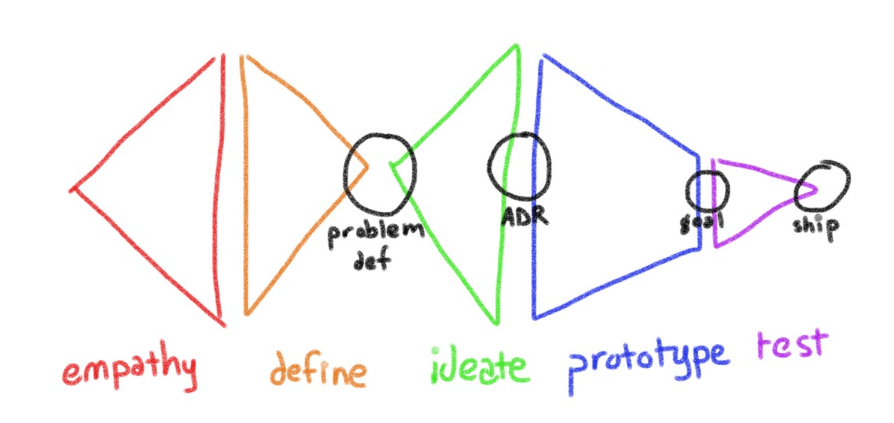
The development lifecycle in the "double diamond" structure, with empathy starting small and expanding. Next is defining, which picks up big where empathy left off, and hones down. At that decision point, a problem definition is created. Ideation again expands the space, and an architectural decision record hands off to the prototyping stage, which starts to narrow the space down again. Finally, testing finishes out that point and the decision is whether or not to ship.
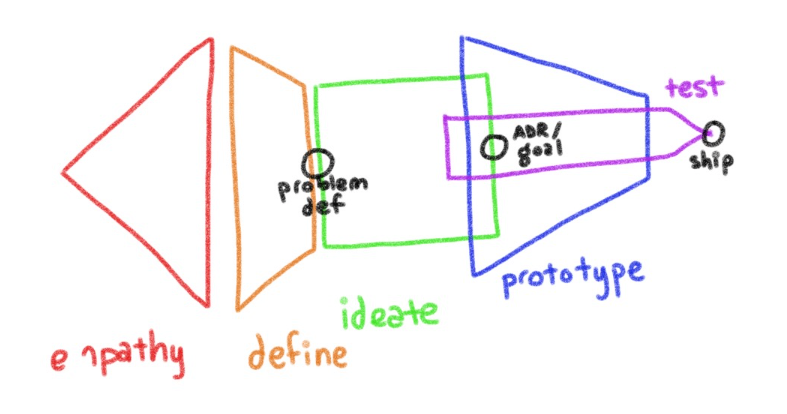
Empathy still expands and hands off to a defining stage. However, the definition stage is truncated and moves to a broader ideation stage with a problem definition that is broader. Testing begins in a narrow but straight shot in ideation, soon followed by and overlapping with a broad prototyping stage. When ideation completes, an ADR and goal document is written. Prototyping continues to its truncated point, and then testing finishes out and the final decision point of shipping still exists.
Continue reading