A great day on Twitter

So I’m trying to get things in order to attend a hackathon against gender-based violence in rural India put on by a woman named Chinmayi who had been a GWOB participant, then mentee, and is now a friend of mine. Trying to sort things out means filling out an online visa application for India, which has been pure hilarity. The joys of Twitter are recreated here for the stake of posterity.


Continue reading

Dialling Up Resilience

Originally posted on the Aspiration blog

At the end of April I was in Nairobi doing several things related to digital humanitarian response. One of these was a program called Dialling Up Resilience (yes, with two Ls in “Dialling,” because it was a British-centred team), which looks at local indicators of resilience. This blog entry explores why subjectivity is important in measurement, and how technology can help us parse through subjective information and combine it with objective datasets.

Scarcity

It’s possible to exacerbate or alleviate existing inequalities when designing and implementing response programs. As climate change alters the world around us, the people who have been historically marginalized often become even more so as those in power see scarcity encroaching on their livelihoods. When programs distribute resources without taking care with those previously in power, we also see backlashes and resource grabs. But the ability to hold people accountable in new ways through things like social media and community mapping are coupled with an awareness and effort towards the long bend towards justice means there are groups of people seeking new ways to better allocate resources to those most affected by those inequalities. Often, the groups working in this space are also in a post-scarcity mentality — that, when we work together wisely, we can do a whole lot more with a whole lot less. These are folk who think we can reach zero poverty and zero emissions (within a generation). These are the folk who see joy in the world, and possibility in these difficult situations we’ve backed ourselves into.

Resource Allocation

The resource allocation and accountability necessary for transitory steps towards a world that can survive and even thrive won’t happen in a vacuum. The formal and informal organizations of this space alike have entire supply chains, ways of listening (and to whom), and self-reflexive mechanisms to consider. In these are embedded corruption, paternalism, and colonialism. But also in these are embedded individuals who have been Fighting The Good Fight for decades, and have added useful checks, amplifiers, and questions into infrastructure. It’s into this environment we step when we do response work. It is, at its core, like any other environment — it has History.

It’s in this context that Dialling Up Resilience is such a good program. This project supports the need to adapt to climate issues while putting frontline communities at its core, and does so in a way which can be useful in historically convoluted contexts. 

Metrics

When various organizations — be they international or local, government mandated or radical, formal or informal — wish to change a circumstance, having metrics can help show if success is being approximated. Hopefully, those metrics can also hint at where and how we’re failing. To adapt to climate change and other issues, we need to be able to see how initiatives are doing over time. We can then better allocate resources or attention. The way this is done now is primarily through “objective” measurements such as education level and income. These don’t work for everyone, whether because they are pastoralists or anti-capitalists (or both). In the same way that some schools shift away from standardized testing into more subjective ways to measure learning, Dialling Up Resilience re-focuses the evaluation of success more locally. This is how the frontline community is at the core — they’re determining what makes them resilient, as well as how they feel they’re doing in relationship to those self-defined indicators.

These metrics are then visible to the community (often we’re our own calvary, afterall), and the aggregate is visible to organizations acting in the area. What are needs they may have missed? Is a program having the desired impact? Because of the flow we set up, the information is even fast enough to potentially be for rapid response, with people in a region indicating a flood-related need then triggering alerts for response organizations to deploy those materials in time.

Working with Existing Communities and Initiatives

We worked with a few different groups directly working in Kenya, including the National Drought Management Authority (and their Ending Drought Emergencies program) and UNDP on their existing surveying initiatives and Climate Change, Agriculture and Food Security, as well as extending those survey abilities with international groups like GeoPoll (SMS), Taweza (call center), and Kobo (household) to assess how communities establish and track their own resilience. While we didn’t get the second round of funding, we hope in future to also work more directly with communities using tools like Promise Tracker and Landscape (a digitized version of Dividers & Connectors) to better expose a community’s data back to themselves, and to subsequently be able to have more agency over their own improvement as well as accountability.

What’s also exciting is that our means and our ends matched. I was again in Nairobi for a stakeholder workshop with not only the project partners, but also with the organizations which would eventually make use of the data. We conducted community workshops to test our basic assumptions and methods against reality, as well as to be sure community voice was at the core of each component we consider. We threw a lot out… and added some amazing new things in. We hoped to break down the gatekeeper dynamic of accessing communities in the Horn of Africa, and we wanted to be coextensive with existing programs (rather than supplanting them). It’s feminist and it’s development and I’m kind of super thrilled that we got to try this idea out, even if we don’t get to do it in earnest (yet). We’ll keep looking for opportunities to carry the idea forward, and the design principles will remain at the core of what we do. You can read more about the proposal and stakeholder workshop here, including that side comment about feminism around page 7.

The Social Disaster Cycle

Originally posted on the Aspiration blog

This blog entry written with substantial input and support from Meredith L. Patterson.

Aspiration has taken on Weaponized Social as an extension of our commitment to solidarity with our community and to equality in our interactions with and through technology.

Better Tools for a Better World

Our work to support more people in their existing efforts by making use of technology has a peripheral effect of bringing historically marginalized populations into online space. And as the ever-larger online community welcomes new people, we have not only an opportunity, but also an obligation, to do so with more intent and understanding than society has tended towards in the past. When we speak of online intimidation or harassment, regardless of the perpetrator or recipient, culturally we struggle with issues of accountability, enforcement, and identity.

It’s a Disaster

We’ve had a few events (NYCNairobi, and San Francisco). From these, and ongoing conversations on the mailing listthe wiki has been expanded and cleaned up. It now includes clearer indicators of how to make use of it, as well as a restructuring into the same framework as the disaster cycle. The disaster cycle falls into preparedness, response, recovery, and mitigation. More details on these, along with the added aspect of being an extreme event, can be found on the wiki, with projects and resources listed below each aspect of the cycle. Event notes and project specs continue to also be hosted on the wiki. What are not found on the wiki are academic resources (which can be found in this literature review compiled by friends), nor organizations and initiatives (which Tactical Tech recently curated here).

This approach was taken because many conversations in this space are derailed when discussion of intentions and tactics are conflated. For instance, #hoodsoff revealed the identity of those both in positions of political power AND who were members of the KKK using the same tactics which those same activists might find untenable in regards to doxxing of visible feminine gamers. Or that the tactics used against Brianna Wu and Chris von Csefalvay match at a pattern level that goes beyond that specific instance of escalation. This is where Weaponized Social seeks to explore and intervene, because human rights apply to everyone, including ourselves and whoever we might perceive to be our enemies. “Lead by obeying,” as the Zapatistas say.

Who Watches those Watching the Watchmen?

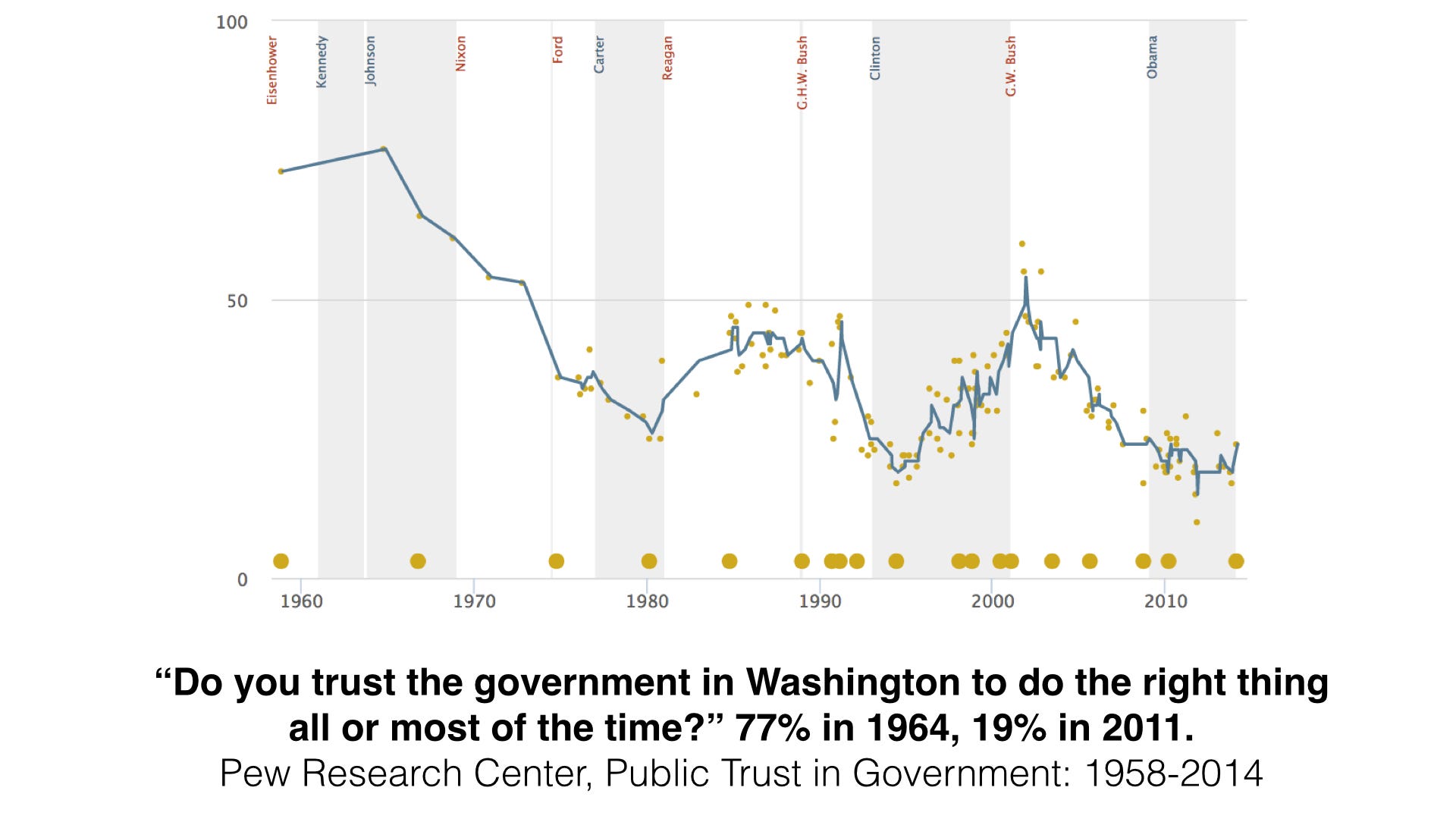
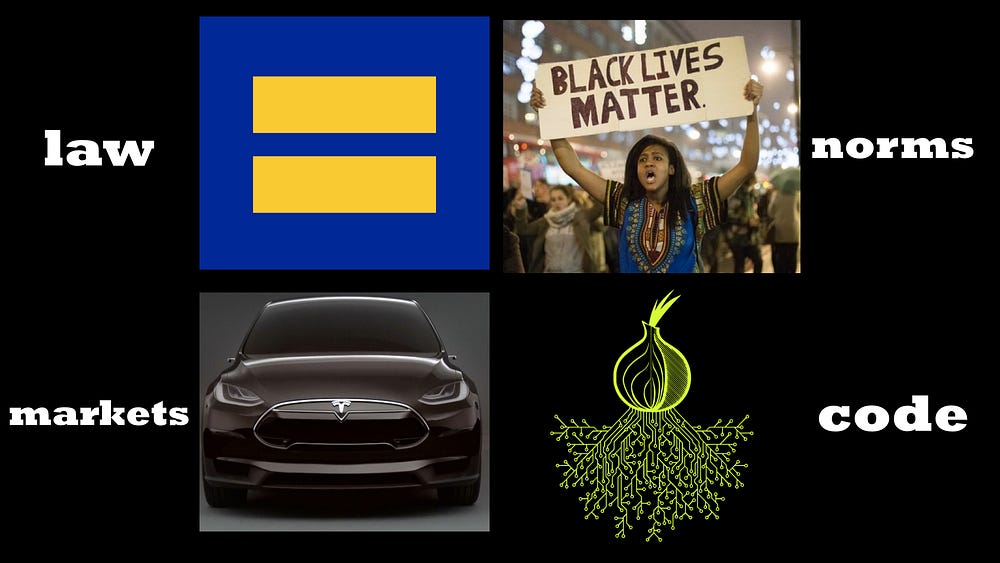
On the same note of rules applying to everyone equally, including the rulers, and of making the conversation clearer, the Weaponized Social crew has also been ruminating a fair amount recently on how accountability and enforcement factors into all this. When people treat each other in unethical ways, our current social systems indicate bringing the law (and associated enforcement) to bear on those breaking the rules. But we are currently facing a long-overdue distrust in enforcement, especially in police. So just as we’re running into the network effects of negative human interaction, we also have no successful foundation to build upon to mitigate through enforcement. The conversation is therefore further confused by asking who should be holding whom accountable, how do we know that’s being done fairly, and how does enforcement happen? Some are turning to community, some to law, some to software platforms, some to police, etc. Each of these may become a viable option. It’s more likely to be a combination therein, and it’s important to think about the historical patterns of enforcement as well as the repercussions of unchecked social errors.

What’s Missing?

The glaring hole which was surfaced by restructuring projects and pieces into this framework is a complete lack of recovery (it’s also totally possible that I’m just not aware of it. If you know of any, please send them our way!). Preparedness and response are necessary and worthwhile aspects to cover, but we offer no long term support or recompense to those who have been affected by the weaponization of social so as to make them whole again. Even legal and policy interventions seem to linger in only half of the cycle, when arguably institutions are responsible for longer term stability (leaving the network to adaptation). This is heartbreakingly familiar, as it’s the same in response to offline disasters.

Additionally, as the conversation expands and deepens, more individuals and organizations are beginning to see their responsibility in encouraging healthy interactions. A few requests have now come in for guidelines in making tools and platforms which take into account these issues. We’ve started to describe the various vectors of online communication which might be fiddled with, and we welcome your feedback!

What I’m excited about is how much of the Weaponized Social crew (most notably, Meredith and TQ) has focused on the mitigation aspect of the disaster cycle. How can we change the very way we do things, to become more pro-social for everyone? We welcome your perusal and contributions to any of the projects on the WeapSoc wiki, but these are the ones I’m most excited about.

What’s Next?

What’s up next is a discussion with Meredith et al to historically, theoretically, epicyclically, technically explore the weaponization of social interaction, such that we can arrive at better interventions. To start, we might discuss the history of liberal social justice and identity politics social justice, cognitive biases, and network effects. You can tune in December 18th at 11a PT / 2p ET by registering here.

We’re also starting to explore a code sprint on some of these tools. If you’d like to get involved, please let us know!

Politicized Humanitarianism

This post is a collaboration between Margaret Killjoy and yours truly. If you find yourself in need of a co-author or ghostwriter, or just generally like to be challenged and your hopes dashed and lifted at the same time, please reach out to them.

“If you are neutral in situations of injustice, you have chosen the side of the oppressor. If an elephant has its foot on the tail of a mouse and you say that you are neutral, the mouse will not appreciate your neutrality.” Desmond Tutu

Four years into the Syrian Civil War, with no end in sight, the Syrian refugee crisis is just getting worse and worse. More than four million people have fled their homes and sought refuge in Turkey, Europe, and throughout the world.

There are wonderful grassroots initiatives (most too informal to even call “organizations”) who are on the ground in Europe helping Syrian refugees navigate the nightmare they’ve been thrust into (bureaucracy and xenophobia) after the nightmare they’ve escaped (the Syrian civil war). But as crucial as it is to meet these people’s immediate needs, it will take more than emergency aid to solve the source of this crisis and ones like it. It will take radical, political solutions.

Relief organizations and related nonprofits could position themselves to advocate and act towards / in alignment with those solutions. Which is to say: we need humanitarianism, yes, but if we’re going to find long-term solutions, we also need politicized humanitarianism.

When we speak of people and groups being politicized, we don’t mean campaigning and/or voting for elected officials every few years. Instead, to be political means to do work that addresses the very way our society—and its decision-making—is structured. For many of us, to be political also means to embrace the feminist concept that the personal is political—that the way we interact with one another one-on-one cannot be divorced from the broader structures of social control. Continue reading

Missing Persons Application!

This is a draft of a blog entry. The idea needs further refinement, and we welcome your feedback!

When a disaster occurs, whether fast like an earthquake or slow like a drought or war, people go missing. As outsiders wishing to contribute to restoring the stability of our worlds, the desire to reunite friends and loved ones through the technology we know so well can be tempting. Making use of our knowledge of social platforms, geotagging, and databases is far easier than addressing the long-term systemic injustices which allow these crises to affect entire populations in the way they do, afterall. But let’s say a typhoon has just made landfall, or that there’s a sudden influx of refugees from a drought-blighted country, and you and a group of your friends have gathered to see what you can do about it. This is beautiful — we need to learn how to work in solidarity with those in other geographies. But it’s also a delicate space. This particular post is about whether or not you should build that missing persons app, or spend your time contributing to something like Google Person Finder, OpenStreetMap, Sahana, or Standby Task Force instead.

The missing persons/reunification domain of humanitarian response is not just about people logging themselves so as to be findable by those missing them. It’s also about those individuals being protected during the process, having support in finding those they’ve been separated from, and the infrastructure which surrounds these actions. Software has a lot to contribute to connection, information security, and sorting through indexes, but missing persons is a delicate space with real humans in the mix.

This is an inhabited space


There are already missing persons tools and organizations which have been vetted for capacity and integrity for follow-through and security. Here are the few most successfully used ones: American Red Cross’ Safe and Well, Google Person Finder, Sahana, Refugees United, International Committee of the Red Cross’ Restoring Family Links, National Center for Missing & Exploited Children. Please offer to help improve and maintain these existing tools (code repos and communities are linked to from each name)! If you are uncomfortable or unsure of how to contact them, please let me/Tim know!

However, we also understand that the world changes. We gain access to new technologies, there are new clever people in the world, and our understandings of situations change. There is *always* room for improvement in this space, just as any other. Want to do something substantively “better” or different than what the existing tools and organizations already do? Here’s what you need to know:

A component, not a solution

The software-based frontend and backing database are a TINY FRACTION of the overall system of missing persons reunification efforts. People are often missing for a *reason*, possibly because of political unrest, domestic violence, or displacement. If your platform publishes photos of someone or their geographic location, will someone try to come after them? Can you protect their physical and emotional wellbeing? There are national and international laws in place to protect such individuals, especially children, and your component of the system must be in alignment with those laws (or have a damn good and intentional reason for not being as such). Ethically, you should also respect an individual’s desire or need for privacy. In the Missing Persons Community of Interest, organizations handling missing persons data are reviewed by external parties for their ability to perform long-term maintainence and protection of said data. You and your tool will need to undergo the same rigor before being launched.

Complications versus easing interaction

Your goal is to make finding loved ones easier, right? Think about how many tools are already in play (see “This is an inhabited space” section above), and what adding one more to the mix would be like. Every new missing persons platform is another point of decision-making stress on the missing persons and those seeking them. Imagine being asked for personal information about yourself while under extreme duress over and over and over again.. or having to repeatedly enter in the details of someone you love and are deeply worried about while on a desperate search for them. The listed existing tools have gone through (and in some cases, are still working out) data sharing flows to reduce these stressors while still maintaining their committments to privacy and security of the data they hold. If you launch your tool, you’ll need to adhere to the same levels of empathy, respect, privacy, and sharing. (Side note, please don’t start a “uniting platform,” either, lest we get here. That’s what sharing standards are about.)

We look forward to your heartfelt, well-thought out contributions to this space.

Tim and Willow

…and yet…

At Cascadia.JS in 2014, I picked up a tshirt from the freebie pile. It’s pink. I know — I was also shocked about this, but the quote on the front was so good I had to go for it. “We don’t know what we’re doing either.” On the back is a subtle “&yet” which I learned was an open source consulting company (ish). Neat! — humility, a culture that accepts shirts which are both pink and comfortable, and a nuanced logo. I especially love wearing this shirt in academic and tech-centric situations.

A few months ago, Case asked my consent to be put in touch with someone on the &yet team — they had a conference coming up, and had suggested I speak. Our phone conversation was brief, but it sounded both fun and values-based, so I said yes (a rarer and rarer thing for me these days), and so I spent Wed/Thurs/Fri of last week in Richland, Washington. If interested, here are my drawings of others’ talks, my slide deck, and the paper I referenced.

It is now easily one of my favorite large social experiences. Music, art, and story were woven throughout the conference, all evoking self-reflection on our role in the path the world takes. It was already populated by some of my favorite people in this space (the aforementioned case, plus ben, jden, kawandeep, etc), and the textcapade starting weeks in advance, recieving letters from another character in the story by mail, all playing through these struggles, had me jazzed up long before the event.

The talks were a beautiful mix of art demonstrations, hopeful distribution structures, empathy arcs, and design philosophies. Inclusion was constantly present, and never for its own sake, but rather from a deep understanding that these are the voices that make up the world. The care &yet took of attendees (and encouraged us to take for each other) opened space for some rather heart-wrenching moments. Please, check out the talks when they go up.

While all of this is amazing, I want to talk about the trust and responsibility that &yet placed in the attendees. The storyline was a surprisingly nuanced version of one of my own ongoing internal battles — burn it all down, or patch to save what we can. (The mixed-mode system work is my attempt at making these transitions graceful, by the by). At no point was a clear value judgement imposed upon the story, or implied to the players. The textcapade transitioned into a sort of backchannel for actors in the parts of those sending the messages at points during the conference, and this archetypical internal battle continued to be played out there as well as by stage actors between talks.
Continue reading

Homelessness, an Initial Inquiry

Originally published on Medium with NECSI

Homelessness is a persistent problem in US cities and elsewhere. Homelessness should not be viewed in isolation, as it is coupled withhealth, career, family and socio-economic context. Recent innovations in approach to addressing homelessness and associated problems in the US, particularly “housing first,” have been hailed as major advances by providing housing and services, without imposed limitations around behavior or curfews. Still, the problem is far from resolved. NECSI dedicated both of our July salons to the topic of homelessness, as well as returning to the topic in October.

We started by building a basic map of the problem/solution space of homelessness — what is the current understanding, strategies to address it and key actors? Participants in our discussion group have contributed to an ever-growing list of initiatives, research, and reflections on this topic.

The difficulties in effective response to homelessness include a mismatch of complexity and scale similar to problems in the health care system. The capabilities of response organizations do not match the scale across the population and complexity of individual circumstances. An industrial one-size-fits-all approach does not address diverse individual problems, but efficiency is necessary in order to address the largest scale societal aspects of the problem at sustainable cost. Moreover, there is limited effort to analyze the underlying drivers and the opportunity to change them so that the problem itself diminishes in scale.

Among the issues that may be exacerbating the problem: weak social support systems of family and community; poor state of mental health care; lack of ready access to adequate medical care; the coupling of poverty, crime and a revolving door prison system; economic developments affecting the relationship of employment opportunities, income and housing costs; geographical dimensions of housing; and the increasing complexity of successful participation in the socio-economic system. We can consider the dynamics of individual participation in society and how it can be disrupted. People may be compelled to depart from established paths of societal participation due to medical emergencies, family conflict, mental health complications, employment problems, or even endemic poverty. Such individuals can get caught in what appear to be similar to the turbulent eddies that accompany rapid flows of fluids, cycling in and then out of jail, halfway houses, homeless shelters or other short-term “solutions.” Escaping these cycles to restore effective participation in society is difficult to achieve without addressing the entire context. The barrier to to such an escape appears ever growing. Prevention may not attract sufficient attention when the limited support programs are available only in extreme cases. In short, by stripping away social support, we’ve made the gaps through which some might fall wider and deeper.

Many cities and organizations are engaged in solving the problem of homelessness, demonstrating a variety of approaches with lessons about what is and is not effective under different circumstances. These initiatives address: access to housing, work, food, healthcare; specific needs such as mental health, addiction, youth & family services; support networks including mentors, social contact with wider community, support for marginalized groups. Enhancing coordination among various types of activities may increase effectiveness. From a complex systems perspective, separating different types of activities may limit their ability to address the complexity of individual circumstances, and perhaps also the scale of the problem across many individuals, but may also enhance innovation. Innovation is particularly helpful if there are opportunities for subsequent integration or scaling up of these efforts. Few efforts are focused on addressing underlying societal drivers, such as reforming the mental health, legal or prison systems. Recent attention to minimum wage can be considered part of the larger framework of economic issues that impact homelessness among other societal problems.

The benefits of resolving these issues are massive — ethically, as well as pragmatically. Ethically, housing can be linked to basic human rights. The rights of the individual, including life, liberty, and the pursuit of happiness, cannot be viewed independently of the systems that enable them to have or exercise those rights. Society also benefits by providing systems that enable individuals to contribute to collective advancement through economic activity and social participation. Pragmatically, the cost of effective safety nets that enable individuals to be productive members of society are lower for many individuals than the alternative — providing housing and rehabilitation for marginalized individuals. Resulting costs include food and shelter, uninsured health care, law enforcement, prisons, etc. When individuals are marginalized, multiple problems reinforce each other. This is compatible with the mathematical model of an attractor in which multiple interacting components self-consistently reinforce a system state.

Cities across the country are renewing their focus on this topic. The White House’s ‘Opening Doors’ initiative asked cities to make 2015 the year ending veteran and chronic homelessness. This time of renewed attention may provide a chance to apply complex systems theory locally, in practice. We are seeking partners with whom to develop a program of engagement, analysis and policy recommendations in our area, and beyond.

the Complexity of Ebola response

Originally published on Medium with NECSI

These notes were taken at the 2014.Dec.18 New England Complex Systems Institute Salon focused on Ebola. Sam, Willow, and Yaneer contributed to this write-up, and 20 people were in attendance. We hope you’ll join us in future. We’ll have unstructured meetings each Wednesday from 18:00 to 20:00 (6p-8p) starting Jan 21st, with the fourth Wednesday of each month structured towards contribution towards a global challenge. The next such structured event will be on January 28th, on the subject of ethnic violence. You can see notes on this and potential future subjects here, and can register here.

About Ebola at NECSI [briefing by Yaneer]

NECSI has a history of studying Ebola models, and has predicted something similar to what is currently going on in West Africa for some time now. NECSI started with a model of pathogen evolution in which the most aggressive stable state has virus constantly passing slowly through populations, creating islands, dying out as people expand into areas with no disease.

Aggressive diseases plus long-range transport

Then if you add long-range transport, you get more and more aggressive strains. The more long-range transport you have the more aggressive the strain can be without dying out; and eventually could kill an entire global population. Paper published in 2006, mentions risk of Ebola.

As transportation becomes more pervasive, vulnerability increases.

Early warning and preparedness

Presented to the WHO in Jan ‘14. They were respectful and excited by the work. Discussed other public health issues faced by WHO, however didn’t return to pandemic models.

Since then: outbreak happened. Lots of discussion. Why don’t we engage in risks in a more serious way? Everyone thinks their prior experience indicates what will happen in the future.

  • Look at past Ebola! It died down before going far, surely it won’t be bad in the future.
  • Models of outbreaks look at existing conditions, which prove to be too limited here.

Example: with flu, people take exactly that disease and known circumstances, and simulate an outbreak, ignoring changes in the disease or in the conditions (and: nothing has to change in order to have huge risk). the same properties could remain, but a low-probability event could unfold, “fat tail distribution” — past experience isn’t necessarily a predictor of what will happen in the future.

Individual and community

Contract tracing, the standard public health method, doesn’t work well when there are more than just a few cases. Stop thinking about the contacts of the person, think about the community. Travel restrictions so new communities aren’t infected. Now that people go door to door for symptom screening, the cases have decreased dramatically in Liberia.

People were saying: “The beds are empty!” Authorities responded: “We can’t figure out why. We think people are still sick!” Why are the hospitals and authorities waiting for the sick to show up? Going door-to-door in the neighborhoods shows what’s going on, and is what is effective.

Once you know the right question, the answer is clear.

Interests

We then stated our interests — each person said one thing about the topic or intro talk they’d be interested in diving into more during breakout groups

Collective understanding, action

Educating people, also incentivizing doing the right global thing

Organizational Inertia — shifting mindsets

Look at reactions of the press

some people saying it’s foolish to talk about Ebola, it doesn’t cause enough deaths — measuring car accidents in the city reqs a small sample; to rule out ebola you need a larger sample.

Treating the community vs individual

Medical risks and questions

Question about door to door: hospitals can be a place for transmission; when you move door to door how does this spread?

Who goes door to door? (send teams. food, &c. they got neighborhood reps to do it)

Marshall / LBR implementer

Medical decision of how to respond

Interrelationships & measurement

Multidimensional; interrelated

Appreciating flexibility of complex analysis to provide new angles

How can we gauge effectiveness in real time? / control groups

General questions:

Building plans over time: how do we share understanding over time

Sharing practice across diseases

? what happens to ‘ECFs’ after the outbreak?

Breakout Groups

We then broke into small groups to continue speaking about these various aspects. The rough notes follow.

Collective Action

Medical response is an individual response.

Go to where the problem is. Impacting people at different stages. Less disruptive to do at a community level. Leaves people where they are and acknowledges that there’s a problem, with a beginning, a middle, an end. Fear is enormous, people begin to see what they might be able to do. 6 years of war isn’t just psychological, it’s structural. So when it goes to the community, it changes that abandonment. Shifting a system

Active demonstration of care. Not just “you have to go to the hospital.”

Have to give up crucially important cultural burial practices.

Close to social unrest in Spain because of the nurse with Ebola.

Treating it as a community problem lets you treat things better on an individual level.

A village in SLE had 7 RC volunteers killed. So who goes door to door? If it’s someone from the community who knows, that’s great. How do you get the communication out there? how do you convince people? how do you get the thermometers out there? There’s an emerging best practice, how do you get the supporting best practice tools out there?

Would opening up internet access to more than first responders be “good” in that people could communicate and self organize, or “bad” in that people would aggregate to the area with wifi for easier transmission?

How is media doing on this? If effective community response is about people having the same idea of the problem, what would US fear-mongering media deal with this?

We live in an information junkie culture. Public health issue at the level of action.

Everything old is new again. We created our public health systems around Cholera, which is twice as infectious and terrible. But our additional systems and structures take us away from our roots.

Social democracies in Denmark, Sweden come out of the Cholera outbreak; the class warfare in England and Russia is in part because they didn’t figure it out.

Want to know how the communities had people going door to door

Burn down Alter incentives for mainstream media to get it right (even if they’re being sensationalist). PRI is doing it right. Build from that.

We need to learn from history

Medical

Vulnerability by transmission, what about transmission that can counter vulnerability?

Propagation of disease and information. Overlap with media issues.

Risk assessment from door-to-door, does it introduce a new transmission risk?

Are community level interventions only diagnostic, or also educational?

Given the dangers of connectivity, how do we exploit those dangers to expose them? Model for hostile agents to move place to place. Immunity at a

Good information and bad information. Effective and ineffective. How do we not just track the disease but the information about the disease? Door-to-door.

  • Ask Lyre if the above covers all that should be brought back to the filed
  • Get the word out: on the necessity of contact tracing

Interrelationships & measurement

How do we know the impact of door to door work? or the evaluation of a particular model?

  • use confidence intervals. widely, to clarify what isn’t yet known.
  • find data you can measure quickly everywhere; see what you can learn from them
  • set up systems measuring this continuously; or on demand when risk rises
  • find alternatives to controls (where traditional c. is immoral)
  • (had a real control here: in opinions about how authoritative to be and act) define how [a place?] to set up and publish about such experiments
  • it’s hard to measure where things start; focus on where thing are transmitted. that changes less over time.
  • identify and track possible levers in this area
  • Can’t observe causality. Could say, under model A it’s more likely that things went down because of change C.
  • Be sure to include confidence intervals, not specific propbabilities find the parts of the system that don’t change. find where decisions have to be made, and which ones make a difference
  • Need broad spectrum activity: you can’t simply test one action at a time, you are often hedging
  • Trade-offs: problems with running a pure control. There’s risk aversion; morality; and uncertainty about how harmful both activity and inactivity would be.

Closeout

How to act?

  • How do you get such a bound when statistics are small? Perhaps you only have 4 distinct outbreak regions.
  • How do you know treatment regimes (social as well as medical) work?
  • Are there moral ways to run a control? Looking into the past, before you applied it; or in regions where you can’t do it for some reason. find systemic shocks, other forced variation real-time understanding is still a problem reporting is complicated as well. who and what gathers data?
  • find data feeds that can be gathered quickly (and learn ways to extract what you want from that sort of data) Try to iterate: to get enough statistics to say something meaningful Fever sensor (for flu) — can be used at a distance.
  • How do you prevent it?
  • YB and NT have written a paper saying it’s a fallacy you see a lot of false positives if you overfocus

Related past discussions

  • Systemic v. idiosyncratic risk
  • Lots of diseases that may come from Ebola (different imprint)
  • Wei (from Hong Kong): Makes me think of swine flu.
  • Even the govt didn’t really mention transmission; and people immediately started to cover themselves and put on masks. Distributed response and decision-making is possible There are things about disease that we can learn, so it’s clear how to react / how to avoid overreacting.
  • Compare computational effects in finance. Similar distributions: fat-tailed. Don’t have the option to cut transportation (there: of data, here: of medical personnel)
  • The # of pre-panics is monstrous. This is dealt with using circuit breakers. Consider creating similar circuit breakers. That’s the only way to avoid the fat tail.
  • Final note on false positives (making people not take alerts seriously). Find a non-binary approach. “If X occurs here, it will be due to amplifying factor Y” — so you can target a response that way in each environment.
  • We could know in W Africa: there’s a risk from having too few clinics & community centers. Early disease: 1900s. John Snow knocked on doors to find cholera. Early crisis maps.
  • We started a war with journalism over ebola: empiricism of the idiot: saying that more people X than die of ebola. overreaction irrational; we had to fight to say it is rational: panic, but early and in the right spot, not late and everywhere else.
  • Think about framing the conversation when publishing to social media. Bypass the press, since they focus on naive issues. And set up a relationship for future communication

Reflection on the Salon’s Structure

Distribute info beforehand: compile readings, slides.

More flipcharts, sharpies, sticky notes. Up on the walls.

Not enough disagreements. Invite a journalist. Someone from other sides. A non-complexity person.

Invite more practitioners.

Return to the topic: revisit, learn, apply.

Multiple breakouts, idea transmission between them

Skepticism makes it easier to take decisive action? The more uncertainty there is overall, the more conservative.

We’re in a time of great risk. How do we respond?

Our current vulnerabilities are growing; without a better avenue for global response, we won’t survive. We have to build those mechanisms.

How do we engage with these problems, how do we discuss them?

How do we develop and propagate these ideas, and welcome more participants?

Expand the community engaged here. We dont need to coordinate a UN meeting to bring about global consequences.

Connected world. if we do stuff here, it can have global consequences.

Renew the way we tackle problems.

Ongoing structure

Once a month — targeted at doing something.

Weekly discussion → action. (what could be done, with whom, how to communicate?)

Rather than looking at one problem per week, look at one type of action per week and look at how it applies across problems.

NECSI Salon : Ethnic Violence

Originally published on Medium with NECSI

On January 28th, the monthly salon gathered at NECSI to discuss ethnic violence from the lens of complex science. Yaneer Bar-Yam, president of NECSI, gave a brief talk about NECSI’s paper about modeling violence. Marshall Wallace, past director of the Listening Project, also gave a quick talk about his field experience with communities who opt out of violence. Again on Feb 4th, NECSI hosted an informal discussion around the case study of Libya. What follows are my big take aways and Sam’s asides, embedded into the fairly rough live notes from the salon. I call out these take aways and asides specifically because note takers often are lost in the notes, just as a photographer is never in the picture.
We hope you’ll join us on Wednesdays of this month to begin exploring medical systems, on ensuing fourth Wednesdays for structured discussion, or on other Wednesdays for more informal times.

Register for this fourth Wednesday here.

I am primarily left with a sense of purpose towards fostering collective intent towards alleviating suffering. In this entry, you’ll see a few ways large-scale violence is posited to be avoided. It is my personal opinion (of which I will opine at the end) that diversity is the key to equality as well as dignity, based on both the complex systems modeling and field experience framing these discussions.

But first, what do we even mean by “violence”? We’re referring to violent events occurring at level of massacres or bombing. These levels do seem to be slightly contextual based upon general violence levels in the area.

When doesn’t violence happen?

Violence doesn’t happen when

  1. all your neighbors are like you, or
  2. all of your neighbors are varied (integration of diversity).

The space between these is where difficulty lies, when not all of your neighbors are like you, but not so consistently unlike you that diversity is the norm. Well then, what do we mean by “neighbors”? It ends up this is very geographically based, and roughly the distance you can traverse in a day by foot or horse (20–40 km), which leads us to believe these tendencies might skew with new travel abilities. Running these models matched up to actualities in Yugoslavia, India.

Some examples

Can either impose integration or separation, intentionally or subconsciously:

  • Singapore forces integration, “to prevent sectarianism.”
  • Greece and Turkey offered to send each other their people.
  • NYC has small patch sizes geographically. But we don’t know how things scaled, the density of people.

A third way to avoid violence: boundaries

The distance you might walk in a day-if there are boundaries around this, unlikely to have violence. These boundaries can be either political or physical. The idea behind this is that if there’s a grouping of a people of a given size in a certain space, they start to impose their values on that space. Others coming through, or “encroaching” who don’t hold the same values would seem to be intruding in a way which violates those values.

If we have patches of that size, can we create peace? Tested the models in Switzerland, which both has diversity of values as well as a general lack of violence. It ends up the mountain rages act as boundaries. Where these boundaries are insufficient, as represented in the models, is where the people do enact violence. Switzerland’s response to these rare pockets was to place a canton, which reduced that violence. Cantons throughout Switzerland are thoroughly mixed by demographic or not at all, which coincides with no violence in these models.

Field Perspective

The clashes in India indicated by census-data overlay are also the area called the Red Corridor, where the Maoist insurgency takes action. That doesn’t show up on the census — and so doesn’t show up on the map models. Gujarat in the West has occasional flareups. There patch sizes may be 20–40km, a lot has intense mixing as well. But there’s a lot of political effort to create separation. It’s intriguing to me that patch size [and equivalents, in other jargon] comes up again and again. Population of Kenya is really dispersed, but the patches of conflict is indeed on the 30/40 km range already referenced. In short, there are alternative explanations for what’s going on — which significantly match up with the models, which is interesting.

from Wikimedia Commons

Creating boundaries

In Rwanda, there were many separations as well as integration. What was happening there? There were boundaries — were these simply in the wrongplaces? In India, Pakistan, Afghanistan, the borders are in the wrong places. The people who live there will tell you that. It’s nice to have models which indicate the same.

Creating new provinces: Kenya has also tried this. [aside: contrast w/ gerrymandering? -s] Power dynamics come out in these processes — people aren’t putting borders in right places. What are their intentions?

Lots of Marshall’s work is on the unintended consequences of delivering aid. Interventions often see the arbitrary boundaries which exist, and work with those boundaries. As an example, one hotbed of violence in Kenya had a mass migration. Those migrating clustered as the villages they had previously been in, but settled across a border between two states was. One state side was Anglican, the other side was Protestant. As the aid agencies only worked on one side of the border or the other, religious conflict emerged as one area simply got more attention and aid than the other. Religiously-aligned people previously uninvolved due to geographic distance got caught up in the conflict because of the way resources were brought into the space.

This relates so painfully to my experience in humanitarian and disaster response, where funding and support are silo’d arbitrarily or based on arbitrary policy, rather than on actual need and people. Marshall’s experience is in the extreme of how this can play out, and we must be cognoscente of it as we build tools and engage with communities lest we fall to the same fate.

Field and Model

YBY: the largest Swiss canton is also separated into circles, separated by religion.

In Rwanda before the violence, the Muslim population was about 10% of the total. The Muslim community as a whole stayed out of the genocide, didn’t kill others. The Hutu Muslims didn’t kill Tutsis, et cetera. Some people suggested that they didn’t participate because they had clustered themselves. This model would say those patches should have been targets for others… note there was also class-based violence within whatever else was happening. Maoists would tell you this is what’s happening there as well, not linguistic or religious conflict.

Are these patches the right size? Too small? Too far apart? People tell stories afterwards, but want to see the system.

Questions and Answers

Can be found where we took live notes, to be aware of attention spans and word counts. My favorite bits include:

  • Can we us stories to change a zero-sum mentality to a winning™ mentality?
  • MLK talking to white America about their myths of fairness and justice and equality.
  • Breaking points, with examples from peace demonstrations that devolved into violence after a rock was thrown through a window, often by non-participants.

Breakout Sessions

Conflict patch analysis: what’s needed next?

Many times people make up differences if they don’t exist. So to what degree is this inescapable? How to identify the identity the factors that matter the most at a given time?
Again, more in-depth notes exist on our live notes, with top-level thoughts as:

  • How do we get to predictions or global scope?
  • How do we refine the model / what might be changed?
  • What other data is possible?
  • How do we prioritize where to look?

Failed States

Belgium as a stable failed state: little violence, garbage still gets picked up. Libya as an unstable failed state: lots of violence, no civic infrastructure. Often places in distress are able to ask for, and hopefully receive, outside assistance. Bolstering from the UN, outside trade support, etc. Besides this large-scale response, local individuals can also receive training and credibility from well-respected and known entities such as UNHCR, Red Cross, or academic or medical institutions; then return home to increase the quality of life and stability of an area. Groups like ISIS break these models, as any external entity (and representatives of such entities) are met with dangerously high levels of threat.

I’d like to point out that the Kurds seem to be doing pretty well (not to diminish their substantial losses) at responding to these sorts of issues, as a distributed group as well. We just don’t like to pay attention to them, as they’re feminist Anarchists.

Closing thoughts from salon

There are a lot of people working on peace and negotiation in Boston (where the Salon took place). We (NECSI) don’t know them yet, we need to start reaching out to them and offering to engage with them. We have a simple model that provides a deep lens, and would like to help move beyond the meme of “all just get along” to an understanding that this may not always work.

NECSI takes part in ongoing conversations with military groups. Do theytalk about these issues — ethnic violence? Yes, with a focus on anchoring discussions in the sense that we’re really an integrated world now. The US is no longer in “out-group” conflict: we are an integrated system. [socioeconomic; also environmental ++] Military is vey forward thinking, compared to health care.

Strategists tackling complexity are often still constrained by policy. We still believe we’re looking at a whole system. The approach of blaming individuals versus governments in recent conflict is related to this shift, represented in part by things like not being able to work with refugee groups in Syria because they’re classified as terrorists. This also relates to how difficult things are with Dadaab, the Somalian refugee camp in Kenya, based on migratory patterns and tribal tensions.

People also talked about scales and stories. A single person can do a thing that matters, and that’s exemplified in both the model and from the field. Does that make this a universality class? In a similar thread, we wondered what can be done in actuality, within people’s comfort levels? How do we encourage people to understand complexity so it’s in their intuition when they make choices?

Maryam and I joined remotely, and had a discussion in our chat about if it’s ethical to separate people by imposing boundaries, or by opting for the “my neighbors should be like me” model over avoiding violence through going for “all my neighbors are different from me (and each other), and that’s ok!” model. In the social sciences, there’s a strong advocating for integration because of the empathy it forces. People tend to self-segregate (this is called homophily, or “birds of a feather”) as it’s easier to be around people who already “get it.” But it’s also easier to avoid noticing how badly others might have it, if you don’t have to see them on a regular basis. See also gentrification, gated communities, slums, etc. When schools in the US were being racially integrated, that was the point that was made (and what proved true) — ends up “separate but equal” does not, in fact, work. Maryam pointed out that the schools are still gender specific in Iran, and that she fears this adds to tension and lack of understanding on all sides. So, while separating out genders, or races, or religions might make things safer in the short term, wouldn’t this lack of empathy and understanding make things less stable and healthy (read: equal, just, dignity for people) in the long run?

My lingering question is about how to maintain important cultural practices while also advocating for enforced empathy.

NECSI Salon: First Day Celebration

NECSI’s action-based 4th Wednesday Salon focused on First Day. This is an event which provides the resources, framing, and impetus to take personal responsibility for community health. It is not a fix-all, but is it an important, missing piece in the US health care debate, and a fulcrum for connected shifts to a healthier society.

On Wednesday, March 11th, we will hear talks from Deb Roy from the MIT Media Lab, Devin Belkind from OccupySandy, and Sam Klein from Wikimedia on Distributed Organizations. Register here.

First Day is about taking personal responsibility for your own wellbeing at personal and global level. Inspired from the idea of regeneration and new year resolutions, First Day wants to create a community level engagement at a personal level and community level.

Deck created by Catalina Butnaru

We assumed those attending would be both in a position to, and have a desire to, act. The Wednesday before had provided space for folk to ramp up to this state, including review of readings about a similar Wal-Mart initative. We were additionally inspired by Boston’s own First Night and City Awake.

After very short reminders of what we were there to accomplish for the day, each person introduced themselves and what they were interested in specific to First Day. From these, we pulled out a few break-out sessions tasked with creating an actionable list or guidelines for organizers to work with. The overarching points we ended with were an appreciation of the need of safe space for people to ask questions which might otherwise be taboo (especially around health), comfort in complex problems having interventions (especially with a light hearted attitude!), an appreciation for existing cultural events (Days of the Dead as well as Chinese, Tibetian, and Indian celebrations of new cycles and health), and holistic approaches to mental and physical health.

Slightly curated notes follow:

Refining the Message

learn + care + act: as leitmotif for everyone there. First Day for partners, participants, sponsors: to learn, care, and act

about yourself, your family, about your network or patients, about particular communities or conditions

make this informal and welcoming. not a sale, no marketing. focused on topics, not on selling a solution

Existing networks focused on outreach and some of the above:

  • health service initiatives (startups, tools)
  • charities, publicity campaigns (often by condition)

Topics for the Fair: areas of most uncertainty, people need reassurance

  • old age : alzheimer’s, self care, company
  • insurance: finding doctors
  • getting regular care: what is available; insurers: in position to ensure people go to the doctor
  • intervention: what is possible, appropriate [mental health, &c]
  • maternity: starting a family, childbirth,
  • chronic pain: exercise, rehabilitation

Stakeholders, defining motivation for each community

  • Business
  • Academic
  • Public

Something the community wants to give, or to solve. A reason to meet together, around what subject. Totally open, or guided topic. If you have a different parts of the community get together and decide on the community level about commitments.

A topic that you care about is more attractive than a generic health fair; which is more attractive than a topic you don’t care about. A celebration is more attractive than an informational event.

So — Invite people to ‘come find your health problem’ at a gathering? Have something like this founded in games and science and discovery?

We focused on ‘Health’ rather than personal resolutions and commitments (compare WalMart’s annual event). What if this broadened to personal improvement?

How to make the event actionable in the moment

Optimize for games and Aha! moments. Fun, Groups, Feedback. How we provide value to the community: value as an outcome, fun as a driver.

Creating a network — Learn and Connect. Make friends.

  • example of phones off in class — bigger reward when the group acts in a certain way (Minority Problem).
  • community or neighborhood paired to itself. Not just an aggregation of individuals, but something you participate in together. Collective.

Make it Fun

Gamifying the event + identification with a group + finding incentives to do more given group identification It’s empowering to make it feel comforting, so we can break the barriers of shame, taboo, to actually address serious problems in a comforting way FUN is the reason to bring them together, and the outcome is learning, value and community building

Working through one Topic

This group discussed if we’d like to focus down on one topic. Topics that impact people’s lives, but action can be taken from prevention to treatment at community level based on how far along a condition is. Possibilities included chronic inflammation, lack of sleep, water, allergies/intolerance, addiction.

Implementation

Distributed component in addition to central fair?

Checklists for different levels of society

  • for cities: checklist for things to do on First Day: walk in clinics, talk about collective obligations, &c
  • for community leaders: checklist for your flock, events and outreach
  • for individuals: checklist for self, talk to your close family (and friends)
  • for organizations: send people to learn, reflect on what you can improve
  • for sponsors: ways to reflect, amplify this community process (compare WalMart day of health & resolution)

Things to worry about

How to vet organizational participants. Choosing a date that makes sense. First day makes sense;

Deck created by Catalina Butnaru

also considered existing health related holiday things that we might plug into. Boston: marathon! Chinese / Tibetan New Year. (Tie in with each community)

Avoiding duplication, can we build, augment, etc? Or is redundancy ok? Preventing across co-option. Trademark transmission

Closing Comments

Thanks to everyone who came out and made the event amazing. We look forward to building First Day with you!