Moving towards “enough”

Alongside emergent organizing (which I also have a bone to pick with), there has been a lot of talk about “abundance mindset.” It never sat very well with me. I tried in 2024 to make it my phrase of the year, to try to understand and move towards it, because it’s seemed to important to people I respect. I failed out that year, and have continued to fail out since. 

The thing that doesn’t sit right with me, I realized after lingering with it, is that it reminds me too much of Trickle Down Economics. If someone has more than enough, the thinking goes, they will use the wisdom by which they came to have so much to share with others and uplift all. But as history has proved out, Regan was a right cunt about this and other things. It just doesn’t work that way. Elon Musk has true abundance, and none of us (should) strive to be like him.

I’m also not interested in simply making do with whatever we have access to. That way lies tolerated inequity and “fuck you got mine.”

I am instead more and more deeply invested in understanding, striving for, and then being satisfied with “enough.” I like the life I have. It is a bit more than enough. I no longer feel guilt about having enough, while continuing to have an intrinsic desire to be sure others have enough, too. Not just enough to survive. But also not more than makes sense. 

Our earth is full of limited resources. Our time is limited. Our access to resources and time should be limited as well, then, while being sure we’re getting enough. 

So I wonder — what is “enough” for you? Do you have it? What does rebalancing to “enough” look like for you? What would it mean for the people around you? For the planet?

The beauty of impermanence

I had a lovely birthday. In-laws took us out to a very nice steak dinner the day before. The day of, Reed, Locke, and I had Italian Hot Beef and wandered the Field Museum before heading home on a flight that departed 15 minutes before a big storm, and had to fly and extra hour to go south around the thunder heads. The day after, we rode bikes with kiddos from Dublin to San Ramon, had fabulous ice cream and played in a joyful park before riding back home. 12 miles at 4 years old feels big to me. In the early evening, some friends and I gathered to talk about the digital and death overlap. I’ll tell you more about that in a moment. The day after that, I rode a metric century with some friends, talking about relationships, death, time, and the economics of attention.

The back of Locke on a bicycle with an orange flag. He is on a multi use path with no cars. Ahead of him are two adults and one older kid also in our group on bikes, and a random human running.

My birthday about digital estate planning ended up being a small but very tight group of people. I was overjoyed to have this conversation with them. We talked a bit about our own attitudes on death, and what we had and hadn’t done to be kind to those around us when we die.

I view death as a community act. It is the final step of ceasing to be an individual, and all that remains is the collective experience of you.

This is complicated by technology lending itself so thoroughly to the hyper-individualization that we as Americans experience. Our entire tech stack feeds into that. As a security professional, I abhor the sharing of an account, and yet it comes so naturally to us to do. You should be able to see what I see. I should be able to share what I have and what I know with you.

Continue reading

Decision Making and Economics

I have this Future Shape in my head and in my heart, that I’ve long meant to share, but haven’t quite known how. I met Asya, and we got into a good conversation, and so now seems as good a time as any to talk about it. She helped me flesh this post out with more detail and deeper dives.

I don’t think there’s one solution when it comes to what economics style we should have, or what governance should look like. Like I drafted way back when, a “mixed mode system” is where it’s at instead.

Decision making

Distributed systems are good at last-mile logistics, nuance, and fast decision making. They are not good at doing simple things at scale. So for actual implementation and innovation, I think distributed networks are where it’s at.

Hierarchical systems are good at making simple decisions at scale. So good for North Star guidance and things you want to take a socialist approach with. That might include assurance of human-rights-shaped things like

Continue reading

Empathy without Responsibility

At the end of each year, I pick a word or phrase to guide the following year. Sometimes it’s really impactful, and other times I barely remember it, and sometimes I even miss the mark. Last year’s was one I was particularly nervous about.

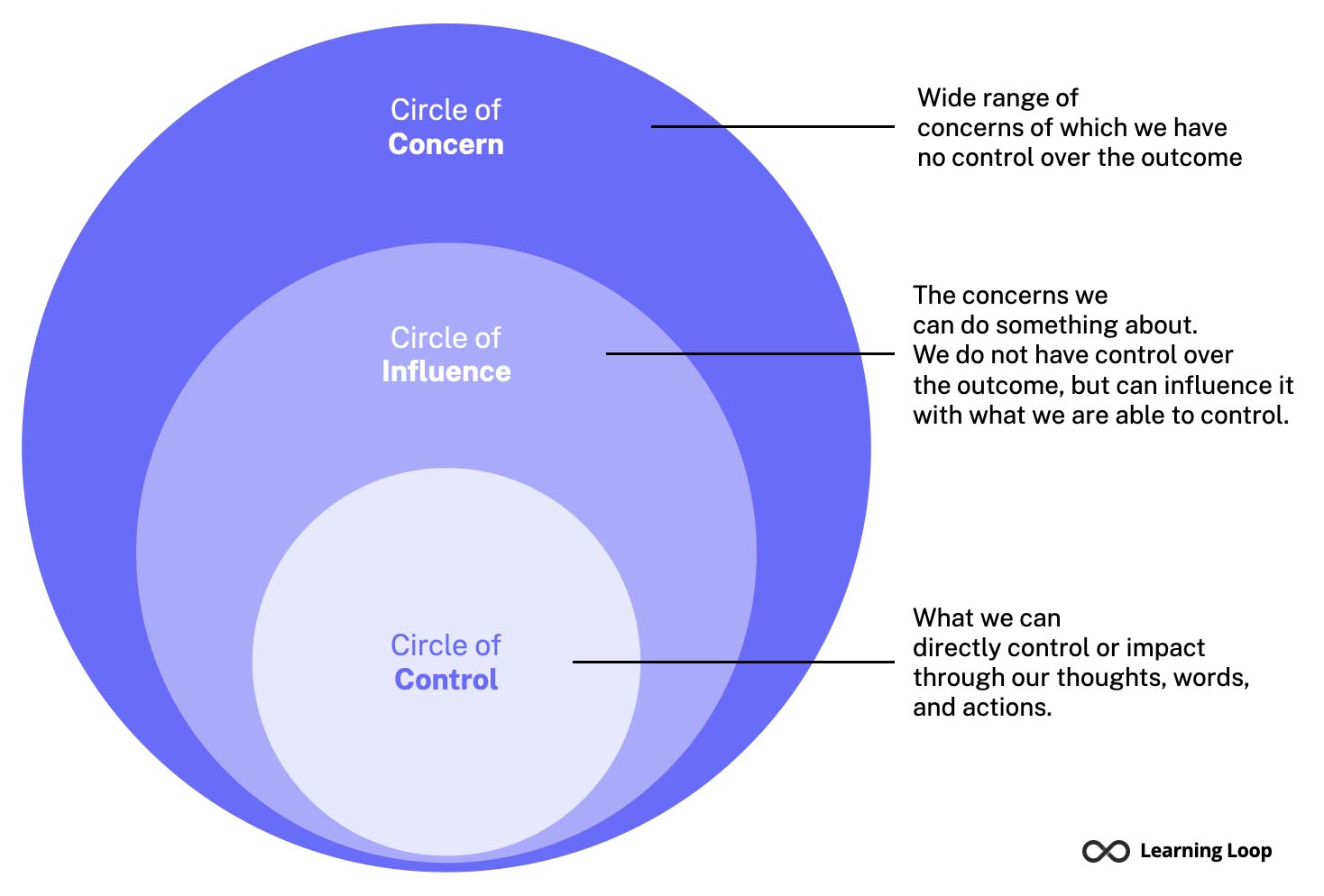
My phrase for 2025 will be something I’ve already begun working on – empathy without responsibility. I was exhausting myself by always wondering if I was focused on the right thing, always doing triage on what might be a better use of my time. Instead, I’m going to focus on what is in front of me and what I have some influence over. I can send money to Translifeline and if a trans kid from Florida shows up on my porch I can house them. But I cannot drop everything in my life to move to Florida to fight the good fight. What I am already doing matters, and I should focus on it.

This is something I had even begun thinking about months before the end of 2024, and realized I needed to pin my year to it. One of the conversations I have had with Reed is about how having a drink helps me give myself permission to disengage from the world. “I am now off duty” I am broadcasting by imbibing. And as someone who is nearly always “on,” that is a useful tool. However, learning to turn down if not off is a skill worth acquiring, and so I set out for the year.

I’m working two approaches: classifying and trusting.

For classifying, I’m determining if something is actually classed into a category that I do have responsibility for. Ends up this is a much smaller set than I initially felt it was. I’m still responsible for a lot — my role in the household, being a parent to my child, an organizer for my neighborhood, the steward of some extra cash to give to others, etc. I am NOT the responsible party for getting an unhoused neighbor on their feet, but I AM responsible for being kind to them and being sure they know about nearby resources and maybe helping them get to those resources. I can also be responsible for making sure that nearby resource knows I have their back, volunteering occasionally, and donating when I have extra. I am not responsible for how Locke does in the classroom, but I am responsible for guiding his behavior when he is at home, and making it clear to the school that I have their back while also having his. Etc.

The smallest circle is the lightest in color, and reads "circle of control" with a pointer that continues "what we can directly control or impact through our thoughts, words, and actions."
The next circle, which encompasses the smallest circle entirely, is slightly darker and reads "circle of influence" with a pointer that continues "The concerns we can do something about. We do not have control over the outcome, but can influence it with what we are able to control."
The final, darkest circle encompasses the other circles and reads "Circle of concern." with a pointer that continues "Wide range of concerns of which we have no control over the outcome."
Screenshot

For trusting, that means I am also trusting the other people in my network and neighborhood to do what they are responsible for. I stay out of their way except for when I have something to offer that might help. I build unlikely friendships with people who have very little practical overlap with me but with whom I am ideologically aligned. I deepen friendships with people similar to me but doing their things further afield so we can align with and learn from each other.

But! I am still looking for tools to deepen this practice. A very dear, very long-time friend of mine is also an exceptional facilitator and is doing a free session on just this thing on Tuesday, November 25th from 9:30a-12 PT. You could come learn with me if you struggle with similar things. It would be great to see your faces there.

The job hunt

So I’ve just signed to start in mid-December as the manager of the AppSec team at a well-known platform. I’m REALLY excited for this for many reasons I’ll get into after I’ve actually started and it feels real. I’m really excited to be able to talk about this part of my life again.

I’ll do a separate post about how I structured my consulting because that’s it own fun setup, but I wanted to take a moment here to talk about how grueling the job hunt is right now and to offer some scaffolding, because being intentional about things is how I stay sane when in a chaotic situation.

This is long because I have a lot to say on keeping track, experiments in approach, and what actually worked this time.

Resources mentioned in here:

  1. Job hunt tracking spreadsheet
  2. Sankey HTML file and associated page/image
  3. Financial burn-down spreadsheet
Continue reading

Time is the only thing we don’t get more of

I’m obsessed with time. I think it’s the only thing we don’t get more of, our most precious resource. It’s the currency of caring. I live my life by my calendar to the point friends have had interventions with me. I had gcal pins made both to celebrate this love and also to subtly flag for polyamory. One of my favorite books is Latitude, about the race between astronomers and horologists to help people sail the sea. So at some point, I realized I wanted to get a tattoo about time.

This is part of a series on my Santa Perpetua tattoos. You can read the rest in the tattoo category on this blog.

Conceptual drawing of Willow's chest piece. Includes a skull in a heart, a person growing up, a heart beat, ASCII hex code that says "the second best time is now", a clock before a sunburst, and paint splatters.
Continue reading

Approaches to Conflict

We’re already seeing people being disappeared. I think we’ll see more of that, and people fighting back, and a possible escalation of violence between civilian factions, and between civilians and the government. I think things will get kinetic soon. I think it’s important to be deliberate in how we approach the incoming conflict, to not be swept up in it. So I’ve been having conversations with friends and neighbors about what this might look like, and how we want to approach things. This blog post is inspired by those conversations, but I’m not going to name everyone here because that would be bad opsec. These are friends with direct experience with conflict, and/or are deeply researched about it.

So first, to set the tone, there are already groups saying we’re lined up for a genocide against trans folks in the US. People who know how these things go say we’re headed there. We need to be aware of this and fight it, not “wait it out.” It will only get better if we make it better. So this is a post not about theoreticals, this is a post about how I’m approaching something that seems certain at this point. Friends say we’ll probably look like Columbia, and suggest Lederach as a person to read, although I haven’t yet.

I’m balancing two views here, both from people I have direct contact with, and both of which are born of deep experience. One is about how some communities decide to opt out of conflict despite it happening all around them, and the other is about being willing to be in conflict with bullies scaring the bullies away in post-disaster zones. From that, I’ve decided my goal is to not be in conflict, and to be ready to defend myself if that approach doesn’t work. And I know you can’t prepare for peace and war at the same time, but also I’m not setting strategy for a country. The Quakers would disagree with this approach, and point out that nonviolence does not mean passivity, and that putting violence on the table tends to optimize for violence and limit approaches to responding to violence. Regardless of how you choose to engage, hold close to the fact that violence isn’t the norm, and we should work to return to a peaceful baseline. Be loud about violence being abnormal and not acceptable. If you go a nonviolent route, make it clear that fighting, if it’s going to happen, happens outside of your space. The people being violent can do it in their own spaces. 

Most of the ways communities have approached opting out of conflict had to do with being connected with their neighbors and always welcoming more people in (if they adhere to the nonviolence). That’s harder after eviction culture and being hyper individualistic — I will forever beat the drum of bringing unknown neighbors baked goods to try to get to know them. Maybe go talk to your local security forces about how they’re thinking about the incoming conflict and what they see their role as — some have already started making statements about never working with ICE. Further afield, having such far-flung communities means having early warning systems for where the violence WILL start, so stay in touch with those loved ones who live in other places and talk about what the local happenings are. 

When Marshall, author of Opting Out of War, came to talk to a small group of us about his research, he told us about the differences between Sarajevo and Tolisa in Bosnia, and how Sarajevo buttoned down in neighborhoods and fell into local violence, and Tolisa united and welcomed others and avoided much of the violence. An impromptu peace demonstration in Sarajevo was fired upon, killing some protestors, and the movement fell apart and so did the city. Marshall focused on holding a broad circle, anticipation, communication, and relationships with security forces to help stave off conflict. In his book, he also talks about throwing a good party as part of the trends in communities that opt out of conflict. 

In that conversation, we also talked about how we need to only persuade a few percentage points of the population to oust Trump. But that means talking to people who might not be aligned with you politically, and what that might look like. I’d recommend the Better Conflict Bulletin for thinking on how to approach those conversations. I’ve started making bets with people online — define thresholds and timelines and check back it. It forces people to acknowledge risks to their world view, a clear story, and a bid for connection. Offering to build bridges can also be seen as traitorous by either end of the spectrum, and that’s problematic to avoiding armed conflict. 

I’ll still be going to the range with neighbors because shooting is meditative and fun, and because I won’t tolerate people bringing violence to my neighborhood. But I will do so while putting 90% more time and effort into nonviolent approaches, and hoping desperately that path is the one I’m allowed to take.

How are y’all thinking about these things?

Additional reading from Marshall:

  • Erica Chenoweth and Maria Stephan, Why Civil Resistance Works
  • Chenoweth, Civil Resistance: What Everyone Needs to Know
  • William Ury, The Third Side
    • He describes 10 roles for people to play in reducing conflict. It’s an interesting way to think about tapping into people’s strengths and finding the gaps in your organization or your work.
  • Gene Sharp, From Dictatorship to Democracy
  • Sharp, 198 Methods of Nonviolent Action
  • Peter Ackerman, Strategic Nonviolent Conflict
    • Sharp and Ackerman’s organization: The Albert Einstein Institution (https://www.aeinstein.org/). Gene Sharp was instrumental in moving the ideas of nonviolence into secular language from religious. Here in 2025, he’s probably more intellectually influential than King or Gandhi.
  • Srdja Popovic, Blueprint for a Revolution
    • Popovic’s organization: CANVAS (Centre for Applied Nonviolent Action and Strategies) (https://canvasopedia.org/). The publications page has good resources that are also, dare I say it, fun. 
  • Martin Luther King, Jr, Letter From a Birmingham Jail
    • In my opinion, one of the finest strategy documents ever written.
The expression of anger

One of my characteristics I’m most proud of is how even-keeled I am. It served me well in disaster response, it’s served me well in interpersonal dynamics, it’s served me well at work. But it wasn’t always the case – I was a very angry child, and I’ve had to actively learn to be calm through self-discipline, meditation, and empathy.

I had good examples in this – I have never heard either of my parents so much as raise their voices. The only slammed doors in the house were from my brother or me being angry, and then getting grounded for it. We are good Midwestern quiet people.

However, now, when I get angry, I immediately shift into must-win-at-all-costs-including-being-mean mode. I may be quiet, but I can be a cutting jerk.

I don’t trust a relationship until I’ve been in a disagreement with the person. How people navigate a misunderstanding or difficulty, and whether or not they can fight fair with each other, is vital to me knowing if a relationship is sustainable or not. So when Reed and I had our first disagreement, it was interesting. He is a big dude, and he emotes a LOT. (This is one of the many reasons why I love him – he cannot hide how he is actually doing, so I have no anxiety about anticipating what’s going on with him.) This didn’t scare me, as I can handle myself physically (he would never actually hurt anyone, but it can still be scary to have a big human waving their arms with a raised voice). And when I got mean, he responded with “do you really mean that?” which I didn’t. So we enable the other person to fight fair with us. It works out well.

But as our relationship continued on, I started to judge Reed more for his expression of anger. He would slam doors, yell (not at me or anyone else), and stomp. It seemed like a loss of control to me. Initially, I thought it was just the price of admission and I could deal with it. But when we had a kid, I didn’t want the behavior modeled. In talking about it, Reed also didn’t want the holding in of anger (and just getting mean instead) to be modeled for Locke. So we had to figure something out.

In talking to my therapist, friends, and Reed more, the consensus has been that expressing anger, so long as it isn’t directed at someone, is actually healthy. My Midwestern sensibilities are shook.

So for Reed, we have a ranked list of things that are always ok to do, things that are on me to try to work on being ok with, things that should really be avoided, and things that are never ok. He’s done a good job of adhering to the list, and now instead of responding to him expressing anger with “please stop doing that,” I say something like “thank you for picking from the top of the list.” For me, I’m working on muttering angry things when no one can hear, and writing angry emails but not sending them. We’re both making progress at meeting each other.

It still feels like a loss of control, but also just being quiet jerk when I’m angry isn’t a reasonable reaction, either. Eager to hear more thoughts on this topic if anyone has them.

Dimming my own light

I’ve always enjoyed being under the influence. Whether alcohol or more illicit things, I usually have a good time, even when the times aren’t particularly good.

This is absolutely not a “drugs are bad” post. I still enjoy drugs (including alcohol), in the right context. More research is being done on the usefulness of drugs ranging from run-of-the-mill THC to ketamine to hallucinogens. No, this post is about why I used a specific drug to dim my own light (by which I mean “exercising my mind and expecting great things from other people exercising theirs”), where it got me to, and where I’m at now.

Continue reading